𐤊𐤐𐤓𐤉𐤌
כִּפֻּרִים
A Solemn Assembly Before Yahuah
“For on this day shall Atonement be made for you to cleanse you. You shall be Clean before Yahuah from all your Sins.”
Leviticus 16:30
01The Command
Leviticus 23:26–32
“And Yahuah spoke to Musha (Moses), saying, ‘Now on the Tenth (10th) day of this Seventh (7th) month is the Yom Kippur (The Day of Atonement). It Shall be for you a time of Qodesh (Holy) Assembly (Convocation), and You Shall Afflict Yourselves and Offer an Offering made by fire to Yahuah. And You Shall Not Do any Work on that very day, for it is a Yom Kippur (The Day of Atonement), to make Atonement for you before Yahuah your Alahym. For whoever is Not Afflicted on that very day shall be Cut Off from his people. And whoever does any work on that very day, that person I will destroy from among his people. You shall not do any work. It is a statute forever throughout your generations in all your dwelling places. It shall be to you a Sabbath of Observance (Rest), and You Shall Afflict Yourselves. On the Ninth (9th) day of the Month beginning at evening, from evening to evening shall you keep your Sabbath.’”
The Day
Tenth (10th) day
of the Seventh (7th) month
It Begins
Ninth (9th) day
beginning at evening
It Is Kept
Evening to evening
a Sabbath of Observance (Rest)
02The Fire Offering
Offer an Offering in Scripture refers to presenting to Yahuah as an act of Worship, Thanksgiving, or Atonement. These Offerings are a central aspect of the Covenant Relationship between Yahuah and His people, serving as expressions of Devotion, Gratitude, and Obedience.
The Hebrew text reads;
Leviticus 23:27
“and You Shall Present a Fire Offering to Yahuah”.
The “Food Offering” language in some English translations (like the ESV) can mislead. Ashah (אִשֶּׁה ishsheh, 801; Offering made by Fire), occasionally, Sacrifice (Offering), Made by Fire. The Burnt-Offering is (5930 Olah: Burnt Offering) which is not present.
𐤀𐤔𐤄
אִשֶּׁה
Ishsheh
Strong’s H801
Offering made by Fire
In Leviticus 23:27
𐤏𐤋𐤄
עֹלָה
Olah
Strong’s H5930
Burnt Offering
Not present
The Fire Offering says: Sin requires a cost that only Yahuah can provide. The Blood on the Mercy Seat and the Fire on the Altar accomplish Atonement. The Affliction of the Soul prepares the Heart to Receive what the Offering secures. Both are commanded. Neither replaces the other.
Leviticus 1:9
The entrails and legs must be washed with water, and the priest shall burn all of it on the altar as a Burnt Offering (Olah 5930), an Offering Made by Fire (Ashah, 801; Offering made by Fire), a pleasing aroma to Yahuah.
03The Weight of the Day
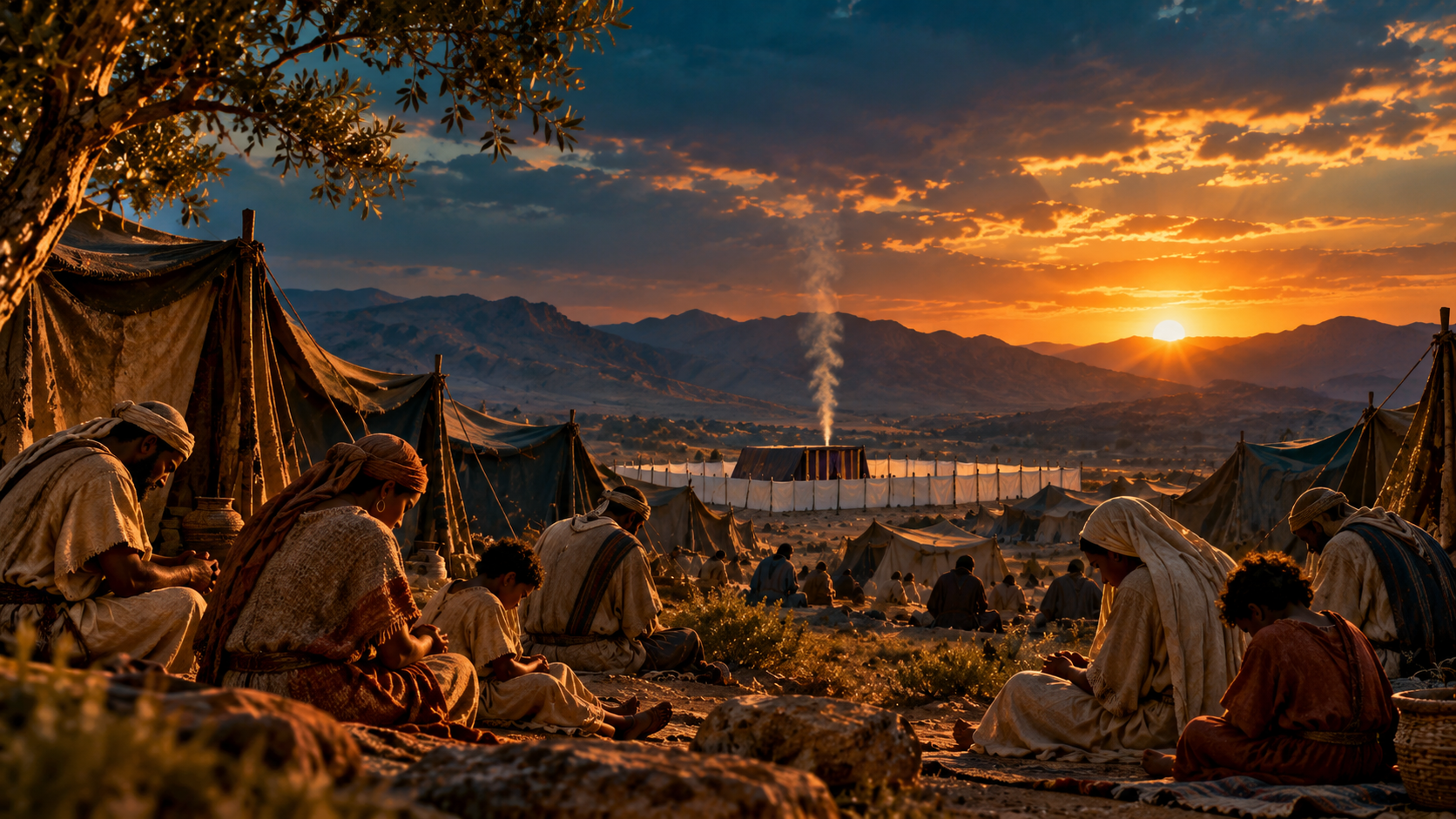
There is a day in the calendar of Yahuah that is unlike any other. It is not a feast of rejoicing, not a pilgrimage of celebration, but a day of being Serious, Dignified, and Formal. It is Yom Kippur (The Day of Atonement), the Tenth (10th) day of the Seventh (7th) month. On this day, the entire Assembly of Yasharal (Israel) was commanded to stop. No work. No labor. No pursuit of daily bread. Only a Qodesh (Holy) gathering (convocation), a Qodesh (Holy) Assembly, and the Affliction of the Soul.
04What It Means to Afflict the Soul
The phrase “Afflict Your Soul” (or “afflict yourselves”) in the Day of Atonement passages is a single Hebrew expression that carries far more weight than the English word “Afflict” might suggest.
𐤏𐤍𐤄
עָנָה
Anah · H6031
עָנָה
Anah · H6031
To Afflict
Oppress, Humble, Answer, Respond
The word in the command
𐤑𐤅𐤌
צוֹם
Tsom · H6685
צוֹם
Tsom · H6685
To Fast
Fast, Fasting
A different word
To Afflict (Strong’s 6031, Anah; Oppress, Humble, Answer, Respond). This is the verb translated “Afflict” or “Humble.” Its core meaning, according to Brown-Driver-Briggs and the lexical data, is “To Be Bowed Down, Afflicted,” or “to Depress literally or figuratively.” It is not a word that means “to Fast” (6685. Tsom), To Afflict describes a Posture, being brought low, made weak, humbled. When directed reflexively at oneself, as in the Day of Atonement texts, it means to Humble Oneself, One’s Appetite to deliberately lower or weaken oneself before Yahuah.
The range of meanings is important: it can denote physical oppression, being Bowed Down under a Burden, or Voluntary Self-Humbling. In Leviticus 23:29, the text Warns that Whoever is Not “Afflicted” (Anah) on that day “Shall Be Cut Off from his People.” The verb is used again in verse 32: “You Shall Afflict Your Souls.” The concordance confirms that the same verb appears.
Numbers 29:7
for the Same Day: “You Shall Afflict Your Souls.”
05The Soul: Nephesh
The Noun: נֶפֶשׁ (nephesh), Strong’s H5315 is the word translated “Soul.” The concordance defines nephesh as “a Soul, Living Being, Life, Self, Person, Desire, Passion, Emotion.” It is not a disembodied “Spiritual” part of a person; it is the Whole Living Self, the Desire, Will, and Emotion. The same word is used for the “Living being.” connecting the breath (Neshamah, 5397) of Alahym directly to the emergence of a human Soul:
Genesis 2:7
“Then Yahuah Alahym formed man from the dust of the ground and breathed into his nostrils the breath (5397. Neshamah) of life, and the man became a living being (5315. Nephesh).”
Dust
from the ground
𐤍𐤔𐤌𐤄
Breath
Neshamah · H5397
𐤍𐤐𐤔
Living Being
Nephesh · H5315
The union of Yahuah’s creative power with the elemental dust introduced a living essence unique among all creatures.
1 Thessalonians 5:23
Now may the Alahym of Shalum (Peace) Himself Sanctify you Completely, and may your entire ruach (Spirit), Soul, and Body be kept blameless at the coming of our Adon Yahusha Ha Mashyach.
In the Old Testament, the Hebrew term often translated as “soul” is “nephesh.” Although “nephesh” can refer to physical life in humans and animals, it typically signifies the inner person—a being with intellect, emotion, independence, and moral responsibility.
In the New Testament, the Greek term “psyche” (5590. “Soul,” “Life,” Self, inner being) underscores the immaterial aspect of a person’s existence. Passages such as
Matthew 10:28
And do not be afraid of those killing the Body but not being able to kill the Soul. But fear, rather, the One (1) being able to destroy both Soul and Body in Gehenna.
The Whole Living Being is formed when the physical body (flesh or dust) combines with the breath or life force (ruach/spirit) given by Alahym.
So when Scripture says “Afflict your Nephesh,” it is not speaking of harming an invisible soul. It is speaking of bringing the Whole Self, including the Appetites and Desires into a State of Humility and Denial, which can lead some to Fast, but it’s not Commanded.
06Affliction and Fasting
The Scripture itself defines the practice by what accompanies it:
Leviticus 23:28, 31
“You Shall Not Do Any Work”
Leviticus 23:32
The day is a “Sabbath of Complete Rest”
The Affliction is set in contrast to Labor and to the Satisfaction of ordinary Desires. We do see in Scripture where Afflicting the Soul is used in Psalms. David writes:
Psalm 35:13
But I, When They Were Sick, I Wore Sackcloth; I Afflicted my Soul with Fasting (6685, tsom: Fast, Fasting).
Here the psalmist uses Afflicting the Soul (Anah nephesh) with Fasting, showing us one example, where Fasting is used to Deny the Appetite that Resides in the Soul, but it was used for a Purpose. “When They Were Sick”, I “Wore Sackcloth”, I “Afflicted My Soul” with Fasting.
Yahuah rebukes Yasharal (Israel) for Fasting while oppressing workers, and He asks,
Isaiah 58:5
“Is such the Fast that I choose, a day for a person to humble himself?”
Yahuah then defines the Fast He desires:
Isaiah 58:6
Isn’t this the fast that I have chosen: to break the chains of wickedness, to untie the cords of the yoke, to set the oppressed free and tear off every yoke?
Mark 9:29
And when he had entered the house, his disciples asked him privately, “Why could we not cast it out?” And he (Yahusha) said to them, “This kind cannot be driven out by anything but Prayer.”
Matthew 17:21
“However, this kind does not go out except by Prayer and Fasting.”
Fasting has to come with a Purpose, or it is just not eating or drinking.
The Day of Atonement command is not a call to self-harm or to bodily punishment. It is a call to voluntary lowering, to take the posture of a servant before his Master.
The Affliction is also not the Atonement itself. The Atonement is made by the Blood on the mercy seat, by the high priest, by Yahuah’s provision. The Affliction of the Soul is the response of the people to the Atonement being made. They do not Afflict themselves to earn cleansing; they Afflict themselves because the day is set apart for cleansing, and the humble Soul is the Soul that receives it.
The text in Leviticus is severe:
Leviticus 23:29
“For whoever is not afflicted on that very day shall be cut off from his people”.
To refuse to humble the nephesh (soul) on this day is to refuse to stand in the posture of a creature before the Creator. It is to insist on one’s own appetite and labor as more important than the Atonement Yahuah has provided. The Affliction of the Soul is the bodily, practical expression of the confession that says:
I am not sufficient.
My appetites do not rule me.
My work cannot save me.
I humble myself before the blood.
So the phrase means this: the whole living self, Appetite, Desire, Will, and Strength, is deliberately brought low in humble dependence upon the Atonement Yahuah makes. It is the Soul saying “Todah (Thank You)” to the Blood on the mercy seat.
The Yom Kippur (The Day of Atonement) is the day when the breach between a Qodesh (Holy) Alahym and a Sinful people is addressed. Not by human effort, not by ritual performance alone, but by the Blood of Atonement and the Confession of Sin.
07The Necessity of Atonement: The Blood and the Veil
Leviticus 16:2–3, 11–14
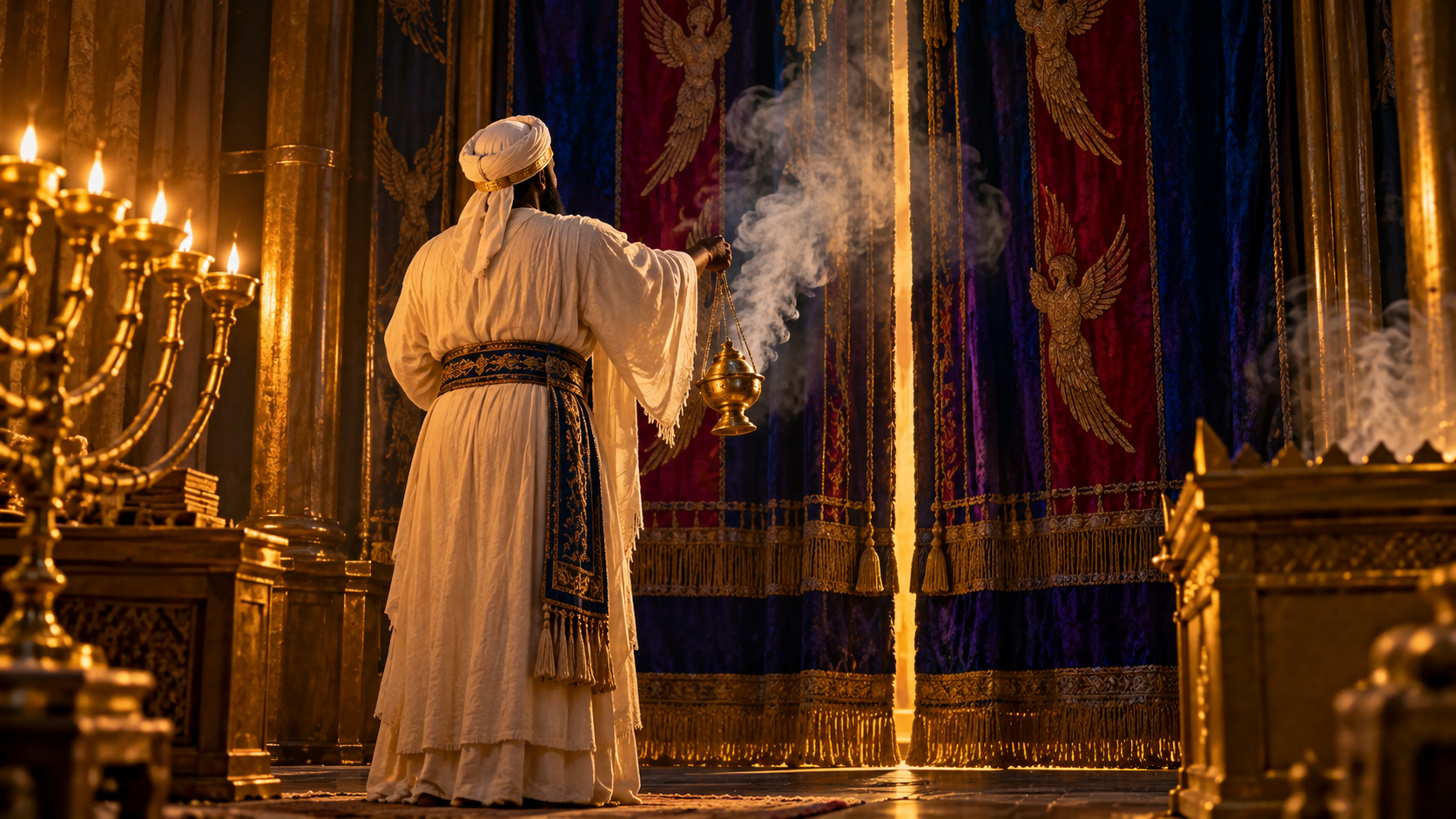
“And Yahuah said to Musha (Moses), ‘Tell Aaron your brother not to come at any time into the Qodesh (Holy) Place inside the Veil, before the mercy seat that is on the ark, so that he may not die. For I will appear in the cloud over the mercy seat. But in this way Aaron shall come into the Qodesh (Holy) Place: with a bull from the herd for a Sin Offering and a ram for a Burnt Offering.’ … ‘Aaron shall offer the Bull as a Sin offering for himself and shall make Atonement for himself and for his house. … And he shall take some of the Blood of the Bull and sprinkle it with his finger on the front of the mercy seat, and before the mercy seat he shall sprinkle some of the Blood with his finger seven (7) times.’”
Atonement requires Blood, and it requires a Mediator. Aaron could not simply walk into the Most Qodesh (Holy) Place. The Veil was a boundary. The mercy seat was a Throne. To approach Yahuah on human terms was to invite Death. The Blood of the Bull was for Aaron himself, the mediator was not exempt from the need for Atonement. The Blood was sprinkled seven (7) times, a number of Completeness and Perfection, before the mercy seat.
Leviticus 17:11
“For the life of the flesh is in the Blood, and I have given it for you on the altar to make Atonement for your Souls, for it is the Blood that makes Atonement by the life.”
Life is in the Blood. Atonement is not a metaphor. It is a life given in the place of a life forfeited. The mercy seat is where justice and mercy meet, but only because Blood is applied.
Hebrews 9:7–8, 11–12
“But into the second (2nd) only the high priest goes, and he goes once a year, and not without taking Blood, which he Offers for himself and for the unintentional Sins of the people. By this the Ruach HaQudesh indicates that the way into the Qodesh (Holy) places is not yet opened as long as the first (1st) section is still standing … But when Mashyach appeared as a High Priest of the good things that have come, then through the greater and more perfect tent (not made with hands, that is, not of this creation) he entered once for all into the Qodesh (Holy) places, not by means of the Blood of Goats and Calves but by means of His Own Blood, thus securing an Eternal Redemption.”
The Shadow
The earthly high priest entered once a year with Blood not his own.
The Substance
Yahusha entered once for all with His Own Blood.
The shadow has met the substance.
08The Two (2) Goats: Atonement and Removal
Leviticus 16:7–10, 21–22
“Then he shall take the two (2) goats and set them before Yahuah at the entrance of the tent of meeting. And Aaron shall cast lots over the two (2) goats, one (1) lot for Yahuah and the other lot for Azazel. And Aaron shall present the goat on which the lot fell for Yahuah and use it as a Sin Offering, but the goat on which the lot fell for Azazel shall be presented alive before Yahuah to make Atonement over it, that it may be sent away into the wilderness to Azazel. … And Aaron shall lay both his hands on the head of the live goat, and confess over it all the iniquities of the people of Yasharal (Israel), and all their Transgressions, all their Sins. And he shall put them on the head of the goat and send it away into the wilderness by the hand of a man who is in readiness. The goat shall bear all their iniquities on itself to a remote areaH1509, and he shall let the goat go free in the wilderness.”
There are two (2) goats, and they perform two (2) distinct functions. The first (1st) goat is slaughtered, its blood makes Atonement. The second (2nd) goat is not killed. It is presented alive, hands are laid upon it, Sins are Confessed over it, and it is Sent away into the Wilderness.
The lot for Yahuah
The First (1st) Goat
- Slaughtered
- Its blood makes Atonement
The Blood Covers.
The lot for Azazel
The Second (2nd) Goat
- Presented alive
- Hands are laid upon it
- Sins are Confessed over it
- Sent away into the Wilderness
The scapegoat carries away.
Atonement involves both Payment and Removal. The Blood Covers. The scapegoat carries away. If the goat were only killed, the Sin would be Covered but not Removed. If the goat were only sent away, there would be no Blood. Both are Necessary.

Psalm 103:12
“As far as the east is from the west, so far does he remove our Transgressions from us.”
Micah 7:19
“He will again have compassion on us; he will tread our iniquities underfoot. You Will Cast all our Sins into the depths of the sea.”
The wilderness is a place of no return. The goat goes to a “Remote area”, the Hebrew suggests a place Cut Off, a land of Separation. The Sins are not merely Covered; they are Taken Away. This is the Promise:
Hebrews 10:17
“Their Sins and their Lawless deeds I will Remember No More”.
Isaiah 53:6
“All we like sheep have gone astray; we have turned, every one, to his own way; and Yahuah has laid on him the iniquity of us all.”
The scapegoat is a shadow of the One (1) who bore the iniquity of us all. But notice: the goat was innocent. It had done nothing. The transfer was by Confession and the laying on of hands, a legal identification. The Sins of the people were put upon the head of the Substitute.
09The Affliction of the Soul: The Response of the Assembly
Leviticus 23:27, 29, 32
“Now on the Tenth (10th) Day of this Seventh (7th) Month is the Yom Kippur (The Day of Atonement). It shall be for you a time of Qodesh (Holy) Gathering (Convocation), and you Shall Afflict Yourselves. … For Whoever is Not Afflicted on that very Day shall be cut off from his people. … It shall be to you a Sabbath of Complete Rest, and You Shall Afflict Yourselves.”
The Hebrew phrase is ‘Anah nefesh, to Afflict, Humble, or Deny the Soul. The Scriptures define this Affliction in practical terms: no work, a Sabbath of Complete (Solemn) Rest, and the Denial of the Natural Appetites. Some call it the “Sabbath of Sabbaths”.
Leviticus 16:31
It is a Sabbath of Complete Rest for you, that you may Humble yourselves; it is a permanent Statute.
Atonement is Received, not Achieved.
The High Priest
The Atonement was made for them by the High Priest.
The People
Their part was Repentance and Rest.
The people did not bleed the goat. They did not sprinkle the blood. Their role was to Afflict their Souls, to Humble themselves, to mourn over Sin, to cease from their own labor. The Atonement was made for them by the High Priest; their part was Repentance and Rest.
Psalm 51:16–17
“For you will not delight in Sacrifice, or I would give it; you will not be pleased with a burnt offering. The Sacrifices of Alahym are a Broken ruach (spirit); a Broken and Contrite Heart, O Alahym, you will not despise.”
The Affliction of the Soul is the Humbling of the Heart that produces a change in conduct. Atonement without Repentance is presumption. The Yom Kippur (The Day of Atonement) was not a license to Sin and be Cleansed; it was a summons to Humble oneself before the One (1) who makes Atonement.
10The Once-for-All Fulfillment: The Veil Torn and the Blood Applied
Leviticus 16:30
“For on this day shall Atonement be made for you to cleanse you. You shall be Clean before Yahuah from all your Sins.”
Hebrews 9:11–12, 24–28
“But when Mashyach appeared as a high priest of the good things that have come, then through the greater and more perfect tent (not made with hands, that is, not of this creation) he entered once for all into the Qodesh (Holy) places, not by means of the Blood of goats and calves but by means of his Own Blood, thus securing an eternal redemption. … For Mashyach has entered, not into Qodesh (Holy) places made with hands, which are copies of the true things, but into Shamym (heaven) itself, now to appear in the presence of Alahym on our behalf. Nor was it to offer himself repeatedly, as the high priest enters the Qodesh (Holy) places every year with Blood not his Own, for then he would have had to suffer repeatedly since the foundation of the world. But as it is, he has appeared once for all at the end of the ages to put away sin by the sacrifice of himself. And just as it is appointed for man to die once, and after that comes judgment, so Mashyach, having been offered once to bear the Sins of many, will appear a second (2nd) time, not to deal with Sin but to Save those who are eagerly waiting for him.”
The Yom Kippur (The Day of Atonement) was never the final answer. It was a rehearsal. The high priest went in year after year because the Blood of bulls and goats could not take away Sins.
Hebrews 10:4
because it is impossible for the Blood of Bulls and goats to take away Sins.
But Yahusha entered the True Qodesh (Holy) Place, not a tent made with hands, but Shamym (heaven) itself, with His own Blood. He did not need to make Atonement for Himself. He was without Sin. He is both the High Priest and the Sacrifice.
| The Earthly High Priest | Yahusha |
|---|---|
| Went in year after year | Entered once for all |
| With Blood not his Own | With His own Blood |
| Qodesh (Holy) places made with hands | Shamym (heaven) itself |
| Offered for himself | He did not need to make Atonement for Himself. He was without Sin. |
He is both the High Priest and the Sacrifice.
Matthew 27:51
“And behold, the curtain of the temple was torn in two (2), from top to bottom. And the earth shook, and the rocks were split.”
The Veil that barred access was Torn at the Death of Yahusha. The Way into the Most Qodesh (Holy) Place is open. Not because we are Worthy, but because the Blood has been applied. The Yom Kippur (The Day of Atonement) is the Finished Work of the Son.
Romans 3:25
“whom Alahym put forward as a Propitiation (Atonement Cover, Mercy Seat) by his Blood, to be Received by Amunah (Faith).”
The Mercy Seatis Yahusha.
The Bloodis His.
The Amunah (Faith)is ours.
The Atonementis Yahuah’s.
11The Call to Afflict the Soul Today
The Yom Kippur (The Day of Atonement) is not a day of empty ritual. It is a day that asks a question:
- Have you Afflicted your Soul?
- Have you Humbled yourself before Yahuah?
- Have you Confessed your Sin, not in generalities, but specifically, with the laying on of hands, as it were, upon the head of the substitute?
1 John 1:9
“If We Confess our Sins, He is Faithful and just to Forgive us our Sins and to Cleanse us from all unrighteousness.”
2 Corinthians 5:21
For our sake he made him to be Sin who knew no Sin, so that in him we might become the Righteousness of Alahym.
The scapegoat has gone into the wilderness. The Blood has been sprinkled on the mercy seat. The Veil is torn. The High Priest has entered once for all. And now the call goes out: Afflict your Soul. Humble yourself. Confess. Rest from your Own Work.
Afflict your Soul.
Humble yourself.
Confess.
Rest from your Own Work.
Hebrews 4:14–16
“Since then we have a great high priest who has passed through the Shamym (Heavens), Yahusha the Son of Alahym, let us hold fast our confession. For we do not have a high priest who is unable to sympathize with our weaknesses, but one who in every respect has been tempted as we are, yet without Sin. Let us then with confidence draw near to the throne of Grace, that we may Receive Mercy and find Grace to help in time of need.”
On the tenth (10th) day of the seventh (7th) month, Yasharal (Israel) stopped. They Afflicted their Souls. They gathered in Qodesh (Holy) Convocation. And the High Priest went behind the Veil with Blood.
But we have a Greater High Priest. We have a better Blood. And we have a day, not a day of shadow, but a day of substance, where the Affliction of the Soul meets the finished work of the Son.
So let us Afflict our Souls. Not to earn Atonement, but because Atonement has been made. Let us Humble ourselves. Let us Confess. Let us Rest. And let us draw Near to the throne of Grace with confidence, not in ourselves, but in the Blood of the Lamb.
Leviticus 16:30
For on this day shall Atonement be made for you to Cleanse you. You shall be Clean before Yahuah from all your Sins.
May Yahuah grant you a Complete Rest, a Broken Ruach, and a deep assurance that the Blood has been applied.
HalluYAH!
Atonement in Three Dimensions
A Message by Brother Rod
To hear even more about the Day of Atonement, listen to this message from Brother Rod, one of the elders of the Assembly of Yahuah, given at the 2025 Day of Atonement service.
Download the Full Teaching Notes
Receive Elder Rick’s complete written notes for “Yom Kippur: The Day of Atonement” as a free PDF—including every Scripture reference and the Hebrew word notes on the Fire Offering, Anah, and Nephesh. Available in English and Español.