Introduction
Our brothers and sisters have asked wonderful questions—questions many in the Torah community share. We’ve all had similar questions. Questions are always welcome in our assembly, and we even welcome respectful challenges. But ultimately, as Yah’s children, we must all be like the Bereans and search the Scriptures for ourselves (Acts 17:11) and study to show ourselves approved (2 Timothy 2:15).
We’re not seeking you to agree with us. Our goal is to clearly explain how we understand Scripture’s instructions for determining the biblical year—to follow what Yahuah’s Word teaches, not create our own system.
Word to the Wise: Never attend an assembly where questions are not welcome.
Common Questions from Set Apart Believers
These thoughtful questions from our community inspired this article:
“Why is your assembly observing Pesach (Passover) in May 2026 when there are other groups observing it in April 2026?”
“Why is the Biblical Year starting in April this year when it started in March last year?”
“Why not begin the biblical year on March 21st?”
“Why did you add a 13th month to the year?”
The answer to these questions affects EVERY feast date for the entire year. Let’s examine what Scripture reveals through THREE WITNESSES — but first, we need to understand what “Abib 1” actually means.
Understanding “Abib 1”
Abib 1 = The first day of the first biblical month
“Abib” is the Hebrew name for the first month of the biblical year (later called “Nisan” after the Babylonian exile).
Abib Word Study:
Hebrew: אָבִיב (Aviv)
Strong’s: H24
Hebrew Letters: Aleph (א) – Bet (ב) – Yod (י) – Bet (ב)
Pictographic Meaning: Aleph = ox/strength, Bet = house, Yod = hand/work, Bet = house (“strength in the house” or more literally: “young green grain”)
Strong’s Definition: Young, tender, green ears of grain—specifically referring to the spring barley harvest month
Why does Abib 1 matter so much?
Because Pesach (Passover) is on Abib 14 — the 14th day of the first month (Leviticus 23:5).
If you start the year in the wrong month, Pesach will fall in the wrong month too.
This is why determining when the biblical year begins is so critical — it affects every single feast date for the entire year.
With this understanding of Abib 1, let’s now examine the three scriptural witnesses that establish when the biblical year begins.
1
WITNESS ONE: Observe the Luminaries
Genesis 1:14-16
Yahuah gave us the sun and moon to determine His appointed times.
The Sun
Marks the SEASONS
- Spring (Vernal Equinox)
- Summer (Summer Solstice)
- Fall (Fall Equinox)
- Winter (Winter Solstice)
The Moon
Marks the MONTHS
- New Moon = New Month
- 29-30 day cycles
- ~354 days per year
What Scripture Says:
“Then Elohim said, ‘Let there be lights in the firmament of the heavens to divide the day from the night; and let them be for signs and seasons, and for days and years; and let them be for lights in the firmament of the heavens to give light on the earth’; and it was so. Then Elohim made two great lights: the greater light to rule the day, and the lesser light to rule the night.” (Genesis 1:14-16)
The Foundation:
- We were not instructed to devise our own methods for determining months and years
- We were told to OBSERVE the sun, moon, and stars
- The sun tells us what SEASON we’re in
- The moon tells us what MONTH we’re in
∴ Both luminaries must work TOGETHER to determine the biblical new year
What Counts as “Observing” the New Moon?
Since Scripture tells us the luminaries are for SIGNS (Genesis 1:14), we must be able to SEE them in the sky.
The Biblical New Moon = The First Visible Crescent
When we can see that tiny sliver of light with our naked eye shortly after sunset, that marks the beginning of the new month. This is what Adam, Moses, and all of ancient Israel would have observed—no astronomical instruments needed, just looking up at the sky.
“Blow the trumpet at the new moon, at the full moon, on our feast day.” (Psalm 81:3)
“Tomorrow is the new moon, and you should not fail to sit at the king’s table.” (1 Samuel 20:5)
Both passages refer to the new moon as an observable event—something you can see and mark.
We Differ From Those Who Use Astronomical Dark Moon Calculations:
Some rely on NASA’s astronomical conjunction—the “dark moon” phase when the moon is positioned between the earth and sun, making it completely invisible to us.
However:
- The dark moon is NOT visible to the naked eye
- There is no Scripture commanding us to calculate invisible astronomical events
- Scripture consistently refers to observing what we can see (Genesis 1:14, Psalm 104:19)
If the luminaries are for SIGNS, we must be able to SEE them. The biblical new moon is the first crescent you can observe in the sky.
This is precisely what Scripture commands: observe the luminaries that Yahuah placed in the heavens. We simply watch for the first visible sliver of the moon—no complex calculations needed—just as believers have done for thousands of years throughout the generations.
2
WITNESS TWO: The Month of Abib Must Be in Spring
Exodus 12:2; 13:4; 23:15; 34:18; Deuteronomy 16:1
The biblical year must begin when BOTH the new moon AND the spring season align.
2026 Calendar Example: Why We Wait for the Second New Moon
🌙
First New Moon
March 19 (evening)
❌ BEFORE Spring Begins
🌸
Vernal Equinox
March 20 @ 10:46 AM
Spring Transition (Mar 20-22)
🌙
Second New Moon
April 18
✓ AFTER Spring Established
What Scripture Shows:
- Exodus 12:2 — “This month [Abib] shall be your beginning of months”
- Exodus 13:4 — “On this day you are going out, in the month Abib”
- Exodus 23:15 — “The Feast of Unleavened Bread… in the time appointed in the month Abib”
- Exodus 34:18 — “The Feast of Unleavened Bread you shall keep. Seven days you shall eat unleavened bread, as I commanded you, in the appointed time of the month Abib”
- Deuteronomy 16:1 — “Observe the month of Abib, and keep the Passover”
The Word “Abib” Means:
Young, green heads of grain — specifically the SPRING harvest season
The Key Principle:
Just because there’s a new moon doesn’t mean it’s in the correct SEASON.
The sun adjusts itself to bring in a different season. Every time the sun adjusts, there’s a different season: the vernal equinox (spring), the summer solstice, the fall equinox, and the winter solstice.
In 2026, the new moon on March 19 (first visible Thursday evening) occurs BEFORE the spring season is established (equinox is March 20 @ 10:46 AM, with transition through March 22). The sun hasn’t yet adjusted to bring in spring.
IMPORTANT CLARIFICATION: The spring equinox is an astronomical event – it occurs at the same moment worldwide regardless of your local weather. “Abib” (spring/ripening) refers to the agricultural cycle in Israel – not your local climate. Whether you have snow in Canada, summer in Australia, or rain in Africa, the biblical calendar is determined by: (1) The astronomical equinox (same moment globally), and (2) The barley ripening in Israel (not your backyard). We don’t each create our own calendar based on local conditions. We observe the universal markers Yahuah placed in the heavens and the agricultural cycle in the land where He gave the Torah.
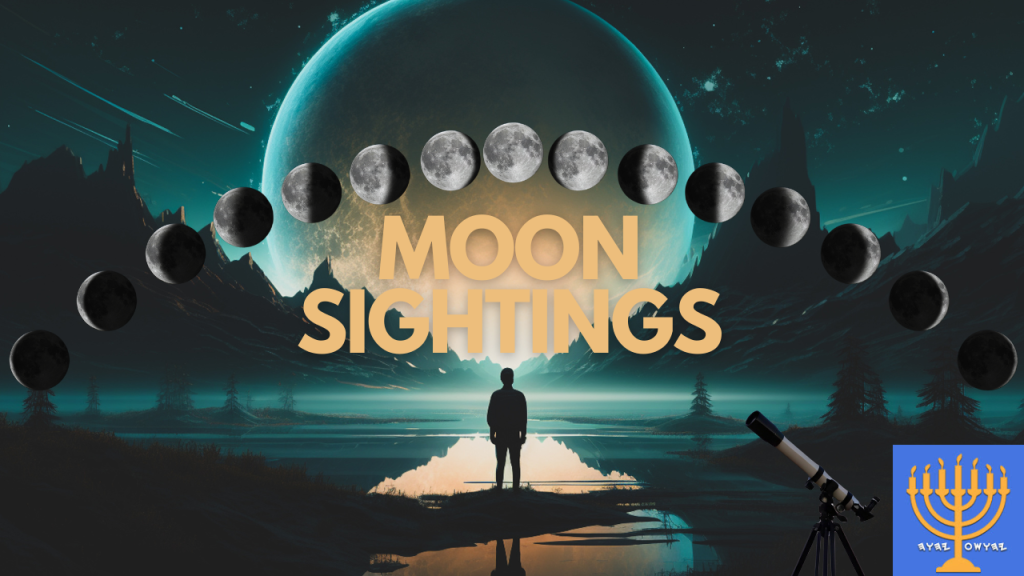
SEE THE EVIDENCE: Moon Sightings from Our Assembly
We have members in our assembly who watch for the new moon sliver each month and take photographs of it. Our companion article includes actual photos from the March 19 (Thursday evening) new moon sightings—including from our own assembly members in Arkansas—showing the crescent was visible BEFORE the equinox.
Beginning April 18, 2026, we will begin releasing monthly new moon sighting photos from our assembly members. We expect to see the new moon sliver on Saturday night, April 18th, around 8:15 PM to 9:45 PM EST.
Learn how to evaluate moon sightings biblically and understand why “first visible anywhere” is the standard.
Therefore, we wait for the next new moon (April 18) to begin the year—when we are clearly and fully in the spring season.
∴ The new moon must occur AFTER the spring season begins
3
WITNESS THREE: The Barley Harvest Confirmation
Leviticus 23:10-11; Deuteronomy 16:9
The requirement for ripe barley at First Fruits confirms we must be in the spring season
Barley as a Confirmation, Not a Determiner:
The barley harvest serves as a natural confirmation that we’re in the correct season. When the sun has transitioned into spring (marked by the vernal equinox), the barley will be ripening. This aligns perfectly with observing the luminaries.
Important Clarification:
Some groups wait for modern “barley sighting reports” from Israel before determining the new year. This practice—waiting for people to physically inspect and report on barley—is neither biblical nor rabbinical. It’s a modern tradition that emerged in recent decades within Hebrew Roots and Messianic movements, popularized by groups like those following Nehemia Gordon and others.
The Biblical Method:
- Observe the sun to know what season you’re in (Genesis 1:14)
- Observe the moon to know what month you’re in (Genesis 1:14)
- When both align (new moon after spring begins), the year starts
- The barley naturally ripens in spring, confirming you’re in the right season
Barley doesn’t determine when spring begins—the sun does. Barley naturally ripens in spring (after the spring equinox) because that’s how Yahuah designed His creation. It’s a confirmation that we’re in the right season, not the primary determiner of when to start the year.
∴ The barley harvest requirement confirms we must be in spring, which aligns with observing the sun’s seasonal marker
ADDRESSING AN IMPORTANT QUESTION
Why Not Just Use March 21st Every Year?
This is an important question because some groups do practice starting the biblical year on March 21st (or the day after the spring equinox) every single year, using a fixed solar date.
The Question:
“Why not simply begin the biblical year on March 21st (the day after the spring equinox) every year, instead of waiting for the new moon?”
The Problem with This Approach:
This method ignores the MOON entirely, using only a fixed solar date.
What Scripture Actually Says:
1. The Moon Marks the Beginning of Months:
“He appointed the moon for seasons” (Psalm 104:19)
The new moon determines when each month begins—it’s not optional.
2. We’re Commanded to OBSERVE Both Luminaries:
“Let there be lights…for signs and seasons, and for days and years” (Genesis 1:14)
We observe what’s in the sky, not follow a pre-set calendar date.
3. The Moon Cycle Cannot Be Ignored:
Starting on the same solar date every year means you might begin the year when:
- There’s no new moon visible
- The previous month hasn’t completed its cycle
- The moon is in the middle of its phase
What a March 21st Start Would Mean:
✗ Ignoring the new moon cycle entirely
✗ Using the same solar date every year regardless of what’s actually in the sky
✗ Creating a man-made calendar instead of observing Yahuah’s signs
✗ Abandoning the principle of observation that Scripture commands
✗ Treating months as arbitrary divisions rather than lunar cycles
✓ The Biblical Method
Wait for the new moon that occurs AFTER spring is established.
This honors BOTH luminaries exactly as Scripture commands:
- The sun marks the season (spring equinox)
- The moon marks the month (new moon)
- When both align, the year begins naturally
This is observation, not calculation.
This is biblical, not man-made.
We don’t create a calendar. We observe the one Yahuah placed in the heavens.
Why the 13th Month Occurs Naturally
Understanding the Mathematical Reality
Two Cycles That Don’t Align Perfectly
Lunar Year
12 lunar months
~354 days
Solar Year
1 complete season cycle
~365 days
365 days (solar) − 354 days (lunar) = 11 days difference per year
| Year | Days Behind | What Happens |
|---|---|---|
| Year 1 | 11 days | 12 lunar months |
| Year 2 | 22 days | 12 lunar months |
| Year 3 | 33 days (over 1 month!) | 13th month added naturally |
| Year 4 | 10 days | 12 lunar months |
| Year 5 | 21 days | 12 lunar months |
| Year 6 | 32 days (over 1 month!) | 13th month added naturally |
The Reality:
There is NO calendar that exists in which there is no adjustment to the seasons.
- Every calendar — the so-called Enochian Calendar, Zadok calendar, every Qumran calendar — has intercalary days (days that must be added at the end of certain months)
- Everything has an adjustment
- The difference is HOW the adjustment is made
Our Approach:
We allow the moon to adjust the way it normally does. If the new moon is ending before the season is established, we allow another new moon to bring us into the season.
That’s why there’s never a 14th or 15th month. It’s always only a 13th month every 2-3 years, because the new moon and the seasons adjust naturally according to Yahuah’s design.
We’re not manually inserting intercalary days into a fixed calendar. We’re observing the luminaries that Yahuah placed in the heavens to tell us when the appointed times are.
THE PRACTICAL IMPACT
Why Pesach Dates Vary
Pesach dates can differ depending on which calendar system is used. Some follow the traditional rabbinic (Hillel II) calendar, while others—including our assembly and other Torah-observant groups—observe the luminaries and barley harvest as Scripture prescribes. The difference is especially apparent in years that require a 13th month. Understanding how Yahuah’s calendar works and how to determine the biblical year helps clarify these variations.
📅 2026 FEAST DATES
For the complete 2026 feast calendar with specific dates and day of week, visit our dedicated feast dates page.
The Simple Explanation:
If you start counting from the wrong month, all your feasts are off by a month.
- Those observing Pesach in April started their year with the March 19 new moon
- But that new moon occurred before spring began
- Their “Abib 14” is not actually in the month of Abib (spring)
- It’s in the 13th month of the previous year
- Following Scripture, we wait for the April 18 new moon sliver (after spring was established)
- Abib 1 begins at sunset on Saturday, April 18, 2026
- Abib 14 (Pesach) falls on May 1-2
- This places the feasts in the correct season as Scripture requires
We Follow Scripture, Not Tradition:
Many sincere believers follow different calendar methods that embrace the rabbinical calculations, the so-called Enochian Calendar, or other calendar systems. We believe Scripture calls us to observe the luminaries (sun and moon) that Yahuah placed in the heavens as our timekeepers and would caution others from using methods that don’t properly observe the luminaries.
Some start the year based purely on mathematical formulas without actually observing whether spring has begun.
“We don’t go by rabbinical tradition or other calendars. We go by what the SCRIPTURE says and what the LUMINARIES show us.”
Because we strictly adhere to the biblical month beginning with the new moon after spring begins, we recognize that on some years this makes us stand alone, or be in the minority as to the timing of Pesach observation, but we’re fully committed to following what we see in Scripture, even when it differs from the majority.
This isn’t rare either. Every 2-3 years, the natural cycles create this situation where a 13th month is added. Those who follow strict mathematical calendars without observing the actual luminaries will consistently be off in these years.
We Invite You to Examine Scripture for Yourself:
Don’t just take our word for it. Examine the Scriptures and observe the luminaries for yourself (Acts 17:11, 2 Timothy 2:15), and reach your own conclusions before Yahuah. We simply ask: What do the luminaries show us? What does Scripture require? And we follow that, even if it puts us in the minority.
Watch the Full Teaching
Hear Brother Jahdiel, one of our elders, explain these biblical calendar principles in detail
IN SUMMARY
Scripture establishes a clear pattern:
The new moon marks the month
The sun marks the season
BOTH must align to begin the year
The biblical year begins when a new moon occurs AFTER the spring season has been established.
For 2026 specifically:
- The new moon on March 19 (Thursday evening) came BEFORE spring was established
- The vernal equinox occurred March 20 @ 10:46 AM (with transition through March 22)
- Therefore, we waited for the next new moon on April 18
- This created a natural 13th month in the previous year
- Abib 1 begins at sunset on Saturday, April 18, 2026 (last year it began March 30)
- Pesach (Abib 14) falls on May 1-2, 2026
- All the feast dates are based on this biblical foundation
Why are we different from others this year?
Those observing Pesach in April started their year with the March new moon—before spring was established.
Their feasts are celebrated in the 13th month of the previous year, not in Abib (spring) as Scripture requires.
We understand others arrive at different conclusions using different methods. We simply ask: What do the luminaries show us? What does Scripture require? And we follow that, even if it puts us in the minority.
Scripture establishes this through the three witnesses we reviewed above: luminaries, the season of Abib, and the barley harvest—all pointing to the same truth.
We follow what we can observe with our own eyes: the sun showing us the season, and the moon showing us the month (Genesis 1:14, Psalm 104:19). When both align, the year begins.
This happens every 2-3 years naturally because of the 11-day difference between the lunar and solar cycles. It’s not man manipulating the calendar; it’s simply observing what Yahuah put in place.
We were told to OBSERVE the luminaries, not follow traditions or mathematical formulas that ignore what’s in the sky—precept upon precept, line upon line (Isaiah 28:10, 13).
These are APPOINTED TIMES—appointments with Abba Yahuah Himself.
We want to show up at the right time to meet with Him. These are not optional traditions; they are divine appointments that our generations should observe forever (Leviticus 23:2, 4, 37-38; Exodus 13:10).
Yahuah is an Elohim of order, not confusion (1 Corinthians 14:33). He does everything decently and in order (1 Corinthians 14:40), and He never changes (Malachi 3:6, Hebrews 13:8). His calendar system is based on what we can see—the sun and the moon working together to reveal His appointed times.
“Then Elohim said, ‘Let there be lights in the firmament of the heavens to divide the day from the night; and let them be for signs and seasons, and for days and years.'”
— Genesis 1:14