Foundation Text
Genesis 1:14–18
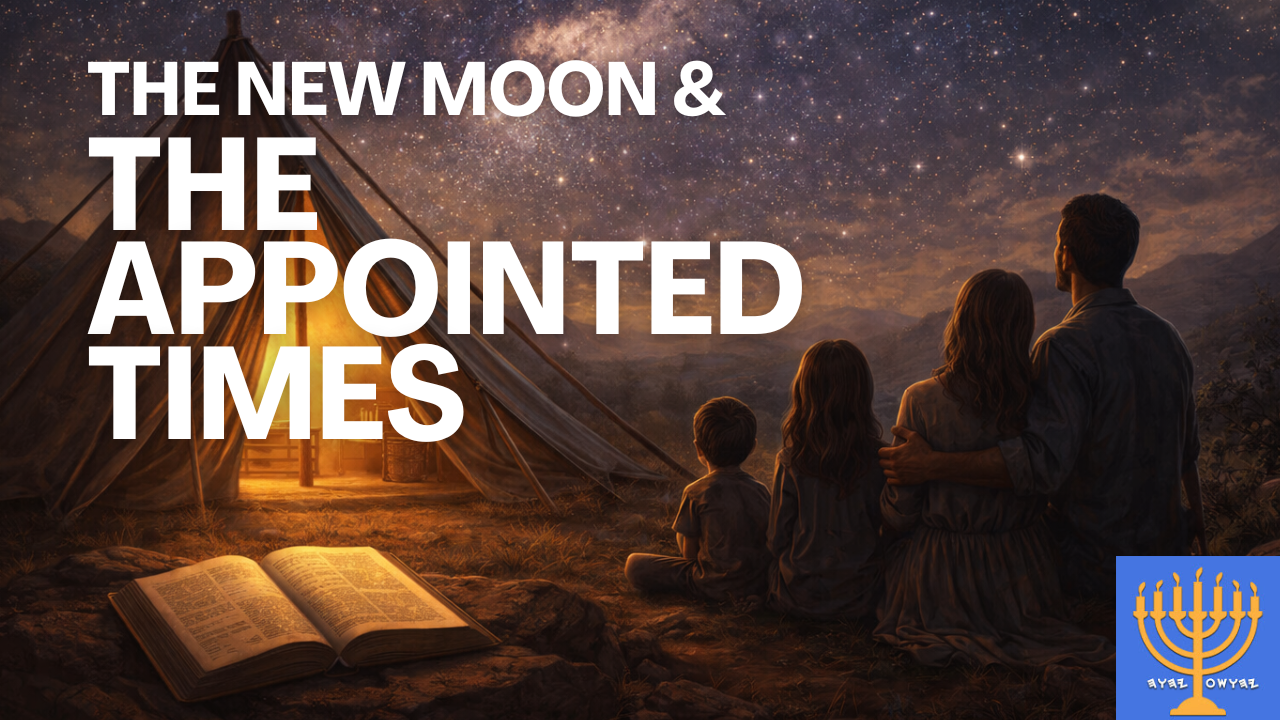
And Alahym said, “Let there be Lights in the expanse of the Shamym (Heavens) to Separate between the Day and the Night, and let them be for Signs and for Appointed Seasons and for Days and Years. And let them be for Lights in the expanse of the Shamym to give light upon the earth.” And it was so. And Alahym made the Two (2) Great Lights: the Greater light to Rule the Day and the Lesser light to Rule the Night; He made the Stars also. And Alahym set them in the expanse of the Shamym to give light upon the earth, and to Rule over the Day and Over the Night, and to Separate between the Light and the Darkness. And Alahym saw that it was good.
(Mark, Miracle, Ensign)
In the sense of Appearing; a Signal (literally or figuratively), as a Flag, Beacon, Monument. The Moon is not merely a Celestial Body. It is a Divinely Ordained Sign, a Visible, Recurring Witness to Yahuah’s Sovereignty, His Covenant Faithfulness, His Appointed Times, and His Redemptive Plan through Ha Mashyach (the Messiah).
From the root יעד (Ya’ad)
Meaning “to Appoint” or “to Meet.” These are Divinely Set times, including Festivals and Set Apart Gatherings.
Begins and Ends at Evening
Evening to Evening, following the Genesis pattern of “Evening (Moon) and Morning (Sun)” Day 1, Evening (Moon) and Morning (Sun) Day 2, etc… This perspective emphasizes Rest (night) before Action (daylight), highlighting a cycle of darkness yielding to light, the reason to look for the sliver of light and then the cycle phases of the Moon that help us count our Days of the Month, until we see the cycle phase continues Daily throughout the Year.
A Year (as a revolution of time)
The Vernal Equinox is the Astronomical Sign of Spring in the Northern Hemisphere, occurring on March 19, 20, or 21 (Fri, Mar 20, 2026, 10:46 AM) revealing the Beginning of a New Year. It happens when the Sun is directly above the Earth’s equator, creating roughly equal day and night lengths worldwide. This event signifies shifting seasons, increased Daylight, and Warmer Weather for the Spring growing season to begin.
The Hebrew year, or Shanah (8141), embodies a mindset of Change, Repetition, and Spiritual Renewal rather than just a linear passing of time. Rooted in Creation and Revolving around Agricultural/lunar cycles, the year is a journey of Reflection, Repentance, and Reconnection with Divine Purpose, beginning in the Month of Abyb (Abib).
The Moon’s Role
“Lesser Light” הַמָאוֹר הַקָטֹן (Ha-Ma’or Ha-Katon)
The Lesser Light, the Moon; Designated to Govern/Rule the Night of the Day.
“He Appointed the Moon (3394. Yareach) for Appointed Seasons (4150. Moed Appointed Time, Appointed Feasts); the Sun knows its…”
In the Turah, Mo’adym specifically refers to the Sacred, Divinely Appointed Times of Yahuah’s Covenant with Yasharal (Israel), the Weekly Sabbath and the Annual Gatherings (Pesach, Shavuot, Yom Teruah, Yom Kipper, Sukkot) as listed in Leviticus 23.
The Psalmist explicitly states that the Moon was created to Mark the “Appointed Seasons” (Mo’adim).
“From Evening to Evening Shall you Keep your Sabbath.”
Referring to Day of Atonement (Yom Kippur). The Biblical Calendar Day ends and a new Day begins at Evening. The Sun “knows” its Appointed time to Arrive, establishing the Rhythm of Daily Life and Worship. The verse does not Assign the Sun the Role of determining Months or Festivals. Its role is in the Daily and Yearly cycles.
Alahym called the Light Day, and the Darkness He called Night. So the Evening (Moon) and the Morning (Sun) were the first (1st) day.
This aligns with the Hebrew word for Month, Hhdsh (Chodesh, 2320), which literally means “New [Moon].” In the Scriptural Calendar, the New Moon sighting was the trigger for declaring the Start of each Month, which in turn determined the Dates of the Festivals.
“It Shall be Established Forever like the Moon (3394. Yareach), a Faithful Witness (Evidence) in the Sky.”
The Moon (3394. Yareach) serves as a Perpetual, Reliable Testimony to Yahuah’s Covenant.
The Moon Represents the Stability and Order of Yahuah’s Creation, symbolizing Yahuah’s Faithfulness and Unchanging Promises.
The Moon Regulates the Hebrew Calendar, Dictating the Timing of Set Apart Festivals and Sabbaths (e.g., New Moon (Beginning of each Month), Yom Teruah (Trumpets), Yom Kippur (Day of Atonement), Sukkot (Feasts of Tabernacles).
Scripture Only
Determining The Beginning Of The Month Using Hebrew Scripture Only
The Hebrew word שֹׁדֶח (Hhdsh/Chodesh) is deceptively simple, often translated as “Month”, but a deep linguistic and theological exploration reveals layers of meaning tied to Creation, Renewal, and the Rhythm of Set Apart Time.
In the Hebrew Bible, Months are determined by the New Moon (Rosh Hhdsh (Chodesh), “Head of the Month”), and was a Day of Special Observance:
Sacrificial Offering — Numbers 28:11–15 prescribes additional burnt offerings on the New Moon, the First (1st) of the Month.
Rest from Commerce — Amos 8:5 indicates that merchants would wait for the New Moon to pass before reselling grain.
A Day for Gathering and Instruction — Psalm 81:3 calls for Trumpets at the New Moon.
A Festival Day — In 1 Samuel 20, Daud (David) omits himself from the King’s New Moon feast, showing it was a time of feasting.
The New Moon was not a full sabbath of rest (work was permitted), but it held a semi-festive status, marking the Sanctification of Time.
חֵת־דָלֶת־שִׁין
Hhet = Divide, Tent Wall, Fence, Separation
Dalet = Door, Pathway
Shin = Press, Eat, Consume, Destroy
Painting a picture of the Separation or Division of the Yom (Day), which is a Door (Gate, Pathway), Pressing forward in Perpetual Renewal / Destroying or Consuming the Darkness with Light.
“Thus says Yahuah Alahym: The Gate of the Inner Court that faces East shall be Shut on the Six (6) Working Days; but on the Sabbath Day it shall be Opened, and on the Day of the New Moon (Chodesh) it shall be Opened.”
The Dalet (Door) imagery is literal here: the New Moon (Chodesh) Opens the Gate of the Inner Court for Worship.
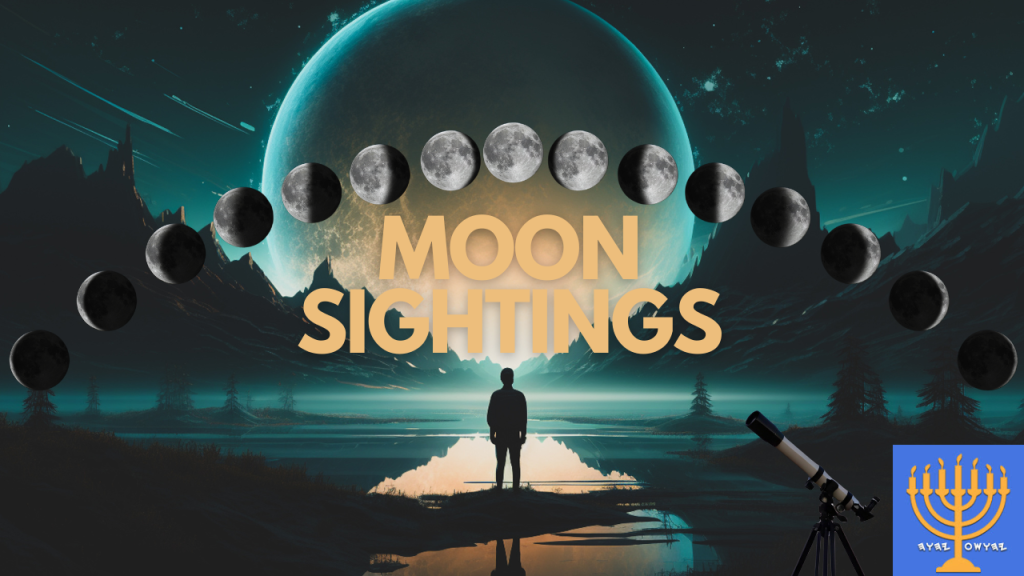
Hhdsh (2320, Chodesh) derives from the root שָׁדַח (Hhadash 2318), which means “to Renew.” Thus, Hhdsh (Chodesh) is not merely a unit of time but “the New [Moon]”, the Moment of Renewal. The very word tells us that a Month is defined by the lunar cycle beginning with the Appearance of the thin Crescent Moon.
‘And in the Seventh (7th) Month (2320, Hhodesh), on the first (1st) day of the Month (2320, Hhodesh), you shall have a Qudesh (Holy) gathering. You shall do no customary work. For you it is a day of Blowing the Trumpets. You shall offer a burnt offering as a sweet aroma to Yahuah: one young bull, one ram, and seven lambs in their first year, without blemish. Their grain offering shall be fine flour mixed with oil: three-tenths of an ephah for the bull, two-tenths for the ram, and one-tenth for each of the seven (7) lambs; also one kid of the goats as a sin offering, to make Atonement for you; besides the burnt offering with its grain offering for the New Moon (Hhodesh, 2320), the regular burnt offering with its grain offering, and their drink offerings, according to their ordinance, as a sweet aroma, an offering made by fire to Yahuah.’
Two Words for Moon
Hhodesh vs. Yareach: Two (2) Words for “Moon”
Hebrew has Two (2) distinct words related to the Moon:
Yareach
יָרֵח
The physical celestial body, the Moon (cognate with Yerach 3391, “Month”). The object in the Sky called the Moon.
Hhdsh (Chodesh)
שֹׁדֶח
The Unit of Time measured by the Moon’s Renewal; also known as the “New Moon” a Calendar Marker. The Set Apart events of the Moon’s Rebirth each Month through all its different phases, like a time clock (Waning and Waxing).
“With the Choice fruits of the Sun, and the Bounty Fruits of the Moon’s Yield.”
This phrase is often translated as “the Bounty of the Moon’s (Hhdsh (Chodesh) Yield” or “the Choice Fruits of the Months (Hhdsh (Chodesh).” Here, Yerachym is the plural of Yerach, derived from Yareach (Moon), and refers to the Agricultural Bounty that Ripens according to the lunar cycles.
Creation’s Witness
Cosmic Testimony to Creation
The Recurring New Moon (Chodesh) is a Witness to Yahuah’s ongoing Creative Power. Jeremiah 31:35–36 ties the fixed order of the Moon to the certainty of Yahuah’s Covenant with Yasharal (Israel), the Hhdsh (Chodesh) is a Sign of Divine Faithfulness.
Thus says Yahuah, Who Gives the Sun (8121. shemesh) for a light by Day, The Ordinances (Appointement, Bound, Commandment, Custom, Decreed, Due, Law) of the Moon (3394. Yareach) and the Stars (3556. kokab) for a light by Night, Who disturbs the Sea, and its waves roar (Yahuah of hosts is His Name): “If those Ordinances (Appointement, Bound, Commandment, Custom, Decreed, Due, Laws) Depart From before Me, says Yahuah, Then the seed of Yasharal (Israel) shall also Cease From being a Nation before Me forever.”
Spiritual Rhythm
Personal and National Renewal
Declares that “from New Moon (Chodesh) to Moon (Chodesh)… all Flesh shall come to Worship before Me.”
The Monthly cycle becomes a miniature cycle of Spiritual Renewal, mirroring the weekly Sabbath and Yearly Festivals.
Covenant Time
Time Is Sanctified by Renewal
In the Ancient Near East, other cultures also used lunar months, but the Hebrew Hhdsh (Chodesh) adds a unique theological layer:
Not deifying the Moon — Unlike neighboring cultures, Yasharal (Israel) did not worship the moon god (Yarikh, Sin). The Hhdsh (Chodesh) does not point to the Moon’s power but to the Creator who sets its phases.
Sanctification by Decree — While the appearance of the New Moon was originally observed by the Sanhedrin based on witnesses, the Month’s Set Apartness was declared by the Court. Through this transferred control of Sacred Time from Astronomical certainty, to human religious responsibility, Time itself becomes an act of Covenant.
In the Hebrew mind, Hhdsh (Chodesh) is not merely a segment of time but a recurring act of creation, a moment when darkness gives way to the sliver of new light, reminding Yasharal (Israel) that Yahuah makes all things new. The use of Hhdsh (Chodesh) consistently indicates that the Month is tied to the Renewal of the Moon.
“Hhdsh (Chodesh) is not merely a segment of time but a recurring act of creation—a moment when darkness gives way to the sliver of new light, reminding Yasharal that Yahuah makes all things new.”
Elder Rick Music — March 28, 2026
Rosh Hhodesh
The New Moon Day is an Appointed Time
Scripture identifies the Day of the New Moon (שֹׁדֶח רֹאשׁ, Rosh Hhdsh (Chodesh), literally “Head of the Month”) as a Distinct Set Apart Day.
“And in the Day of your Gladness, and in your Appointed Seasons (Mo’adim), and in your New Moon Days (יכֶם שֵישֵיׁרָאבְ, be-roshei Hhodsheichem), you Shall Blow the Trumpets over your burnt offerings…”
Daud (David) said to Yonathan, “Behold, tomorrow is the New Moon (שֹׁדֶח, Hhdsh (Chodesh), and I ought to sit and eat with the king…”
“Blow the Shofar at the New Moon (שֹׁדֶחַבּ, ba-Hhdsh (Chodesh), at the Full Moon (15th) (סֶכֶאַבּ, ba-Keseh) on the Day of our Festival.”
Psalm 81:3 Primarily Refers to the Feast of Trumpets (Yom Teruah/New Moon) and the Feast of Tabernacles (Sukkot, 15th), as it Commands Blowing the Trumpet at the New Moon and Full Moon during a Solemn Feast. Keseh (סֶכֶא) is understood from the context to refer to the Full Moon, as the Pesach (Passover)/Unleavened Bread Festival occurs on the Fourteenth (14th) day and Fifteenth (15th) Day of the Month.
On the Fourteenth (14th) day of the First (1st) Month at Evening is Yahuah’s Pesach. And on the Fifteenth (15th) day of the same Month is the Feast of Unleavened Bread to Yahuah; Seven (7) days you must eat unleavened bread.
And on your Joyous Occasions, your Appointed Feasts, and the Beginning of Each Month (2320. Hhodesh), you are to Blow the Trumpets over your Burnt Offerings and Shalum (Peace) Offerings to serve as a reminder for you before your Alahym. I am Yahuah your Alahym.
The First Month
The First (1st) Month is Determined by Abyb (Abib), Ripe Barley
Scripture does not leave the determination of the first (1st) Month to astronomical calculation alone. It provides an agricultural anchor: the stage of Barley called אָבִיב (Abyb).
“This day you are going out, in the Month (Hhdsh/Chodesh) of Abyb (Abib).”
“You shall keep the Feast of Unleavened Bread… for in the Month (Hhdsh/Chodesh) of Abyb you came out from Mytsrym (Egypt).”
“You Shall keep the Feast of Unleavened Bread… in the Month of Abyb.”
“Observe the Month (Hhdsh/Chodesh) of Abyb and Keep the Pesach (Passover) to Yahuah your Alahym, for in the Month (Hhdsh/Chodesh) of Abyb Yahuah your Alahym brought you out of Mytsrym (Egypt) by night.”
“Green Grain”
Referencing the Stage of Ripening Barley, which Marks the Harvest Season. אָבִיב (‘Abyb) denotes the Stage when Barley Kernels have filled and the heads have softened but have not yet dried. It marks the transition from green growth to ripened grain suitable for roasting.
“If you offer a grain offering of your firstfruits to Yahuah, you shall offer for the grain offering of your Firstfruits Abyb (green heads of grain) roasted on the fire, grain beaten from full heads.”
Instructions for the Priest to wave the first (1st) sheaf (omer) of the Barley Harvest of the firstfruits on the day after the Sabbath (Feast of Firstfruits) be waved before Yahuah during the Feast of Unleavened Bread.
This Wave offering cannot occur unless the Barley is in the Abyb stage. Therefore, the first (1st) Month must be the Month in which the Barley reaches Abyb (typically March or April).
“Observe (8104; To Keep, Guard, Wait (for), Watch(-man)) the Month of Abyb and Keep the Pesach (Passover) to Yahuah your Alahym…”
If the Barley was not Abyb the leadership would wait until the Barley reached that stage before declaring Abyb.
“Thus we wait for the New Moon (Hhdsh/Chodesh) after the Vernal Equinox, so we are officially in the Spring Season. Observing the Month (Hhdsh/Chodesh) of Abyb is the Beginning of Months. This results in a Year of 13 Months as we have this Year.”
Elder Rick Music — March 28, 2026
Current Year
2026 Observation
Within our assembly, local eyewitnesses confirmed sighting the new moon sliver on Thursday evening, March 19, 2026. Their reports align with numerous verified sightings from across the United States and beyond. Below are some of the photographs captured that evening.
US Sighting: March 19, 2026 — At 35 minutes after sunset, a thin crescent moon, 1% illuminated, is 5° above the western horizon, 6.6° to the lower right of Venus.
Vernal Spring Equinox: Happened on Fri, Mar 20, 2026, 10:46 AM Northern Hemisphere · Eastern Time.
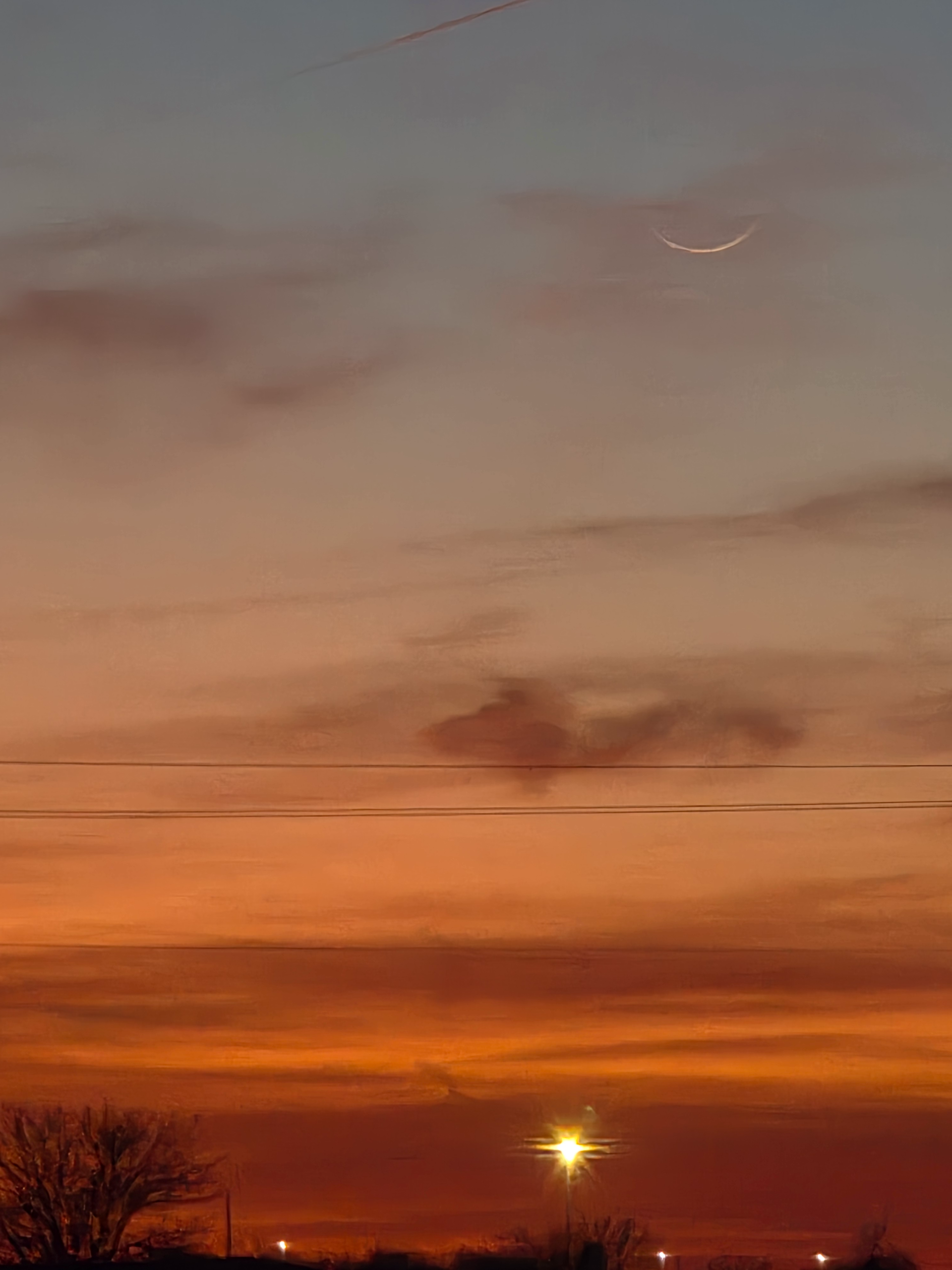
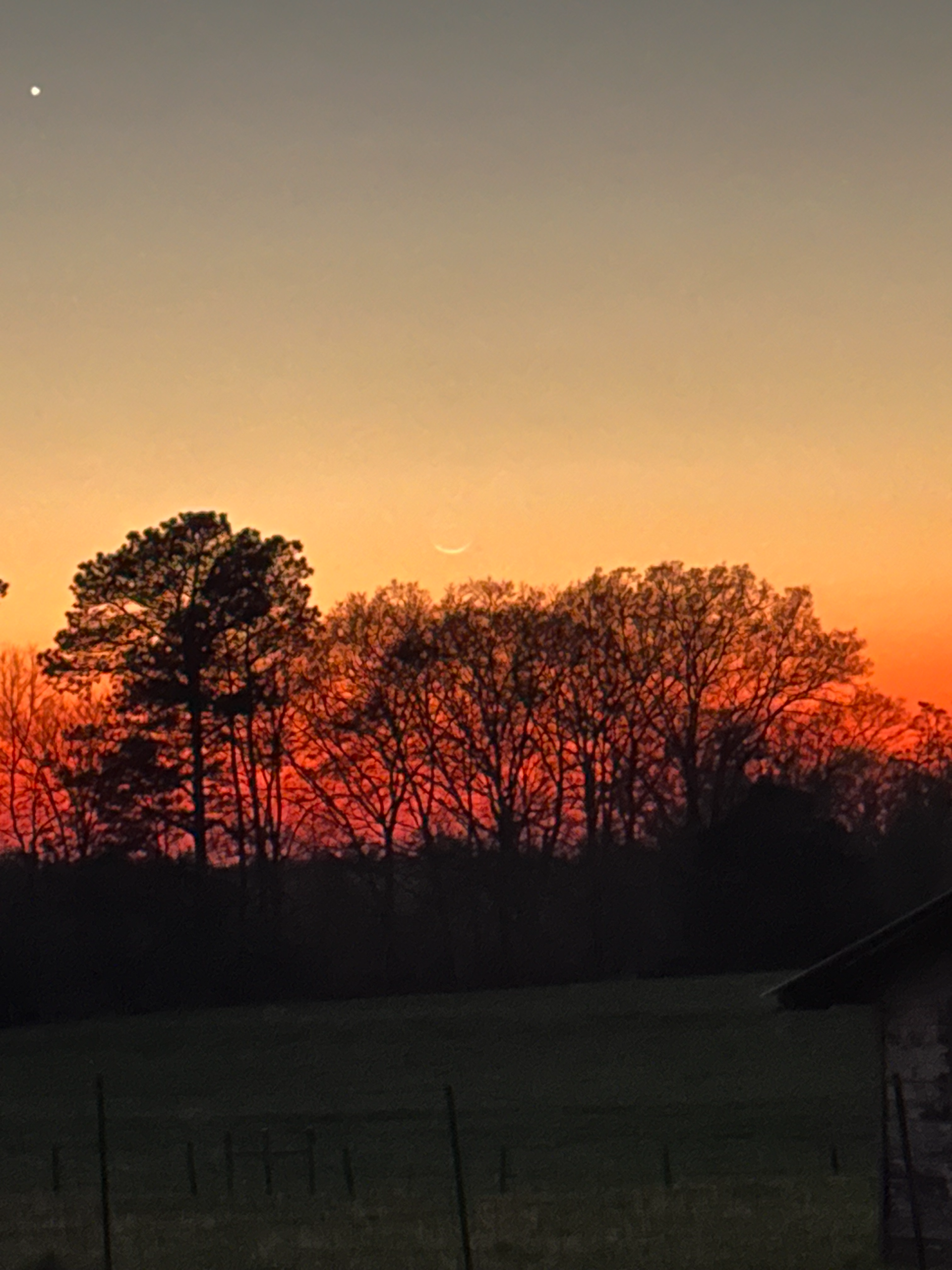
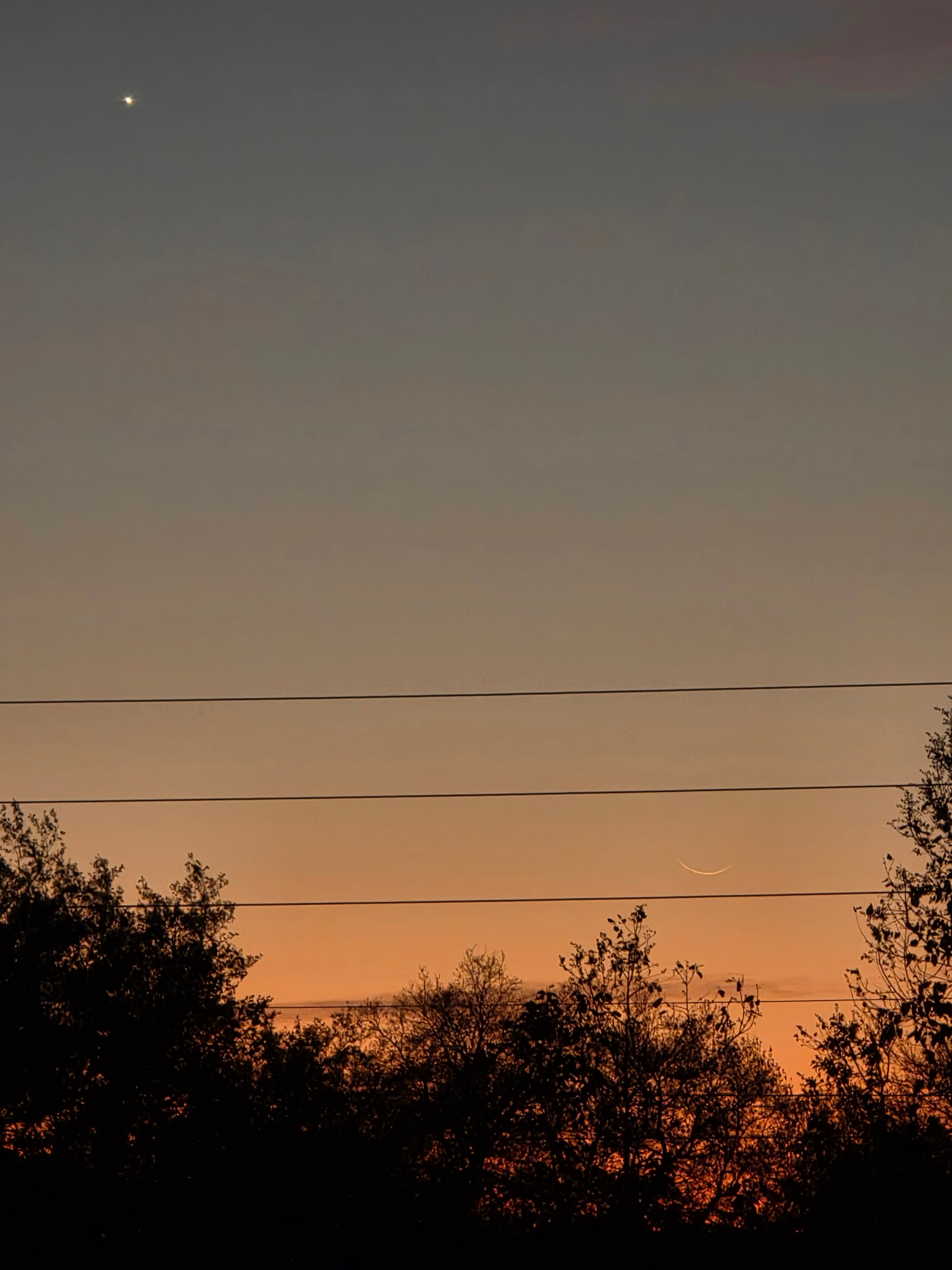
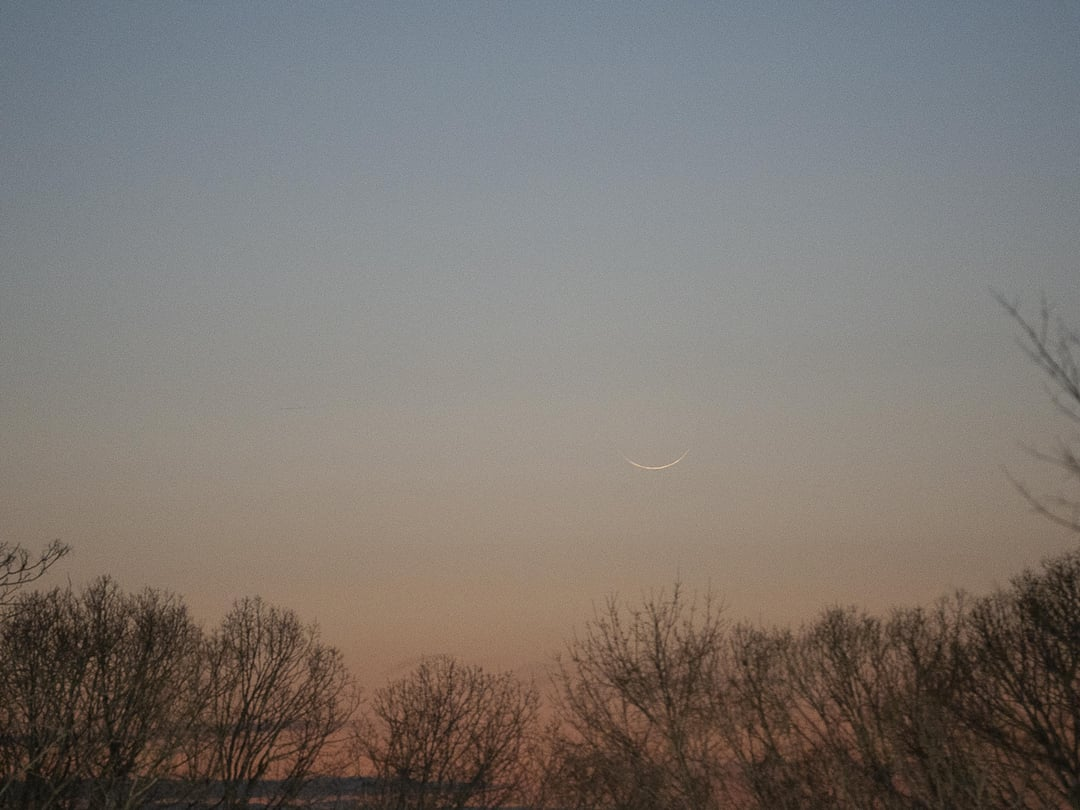
The first report of the 1st month of the year came from Brooklyn Bridge Park, New York, USA and points westward on Thursday evening, March 19th. Israel sightings were also reported the following evening, as expected, at the end of the 30th day there.
Sightings are presented based on eyewitness reports without regard to their personal beliefs or affiliations. Steps are taken to help assure reports are accurate and truthful.
Photos & sighting reports courtesy of RenewedMoon.com
Calendar Systems
Calendar Comparison
The Biblical (Lunisolar) Calendar: The Living System
The calendar described in the Turah is a lunisolar system. Months begin with the sighting of the New Moon (Rosh Hhodesh), which ties the word Hhdsh (Month) to its root meaning “New”. Because 12 lunar months total about 354 days, a leap month is added 7 times every 19 years to ensure Pesach (Passover) stays in the Spring (the Month of Abyb). This calendar is dynamic. Its sanctification relied on human observation and the declaration of the court (Sanhedrin), rather than a fixed manmade calculation.
The Lunisolar calendar aligns with both moon phases and solar seasons by adding a 13th month every few years, while pure lunar calendars (like Islamic) only track moon phases, resulting in a year ~11 days shorter than the solar year. Lunisolar calendars keep seasons consistent; pure lunar years rotate through seasons over 33 years. Lunisolar is often used for Agriculture and Traditional Festivals.
A lunar calendar is based on the 29.5-day cycle of the Moon’s phases, typically containing 12 months in a 354-day year, making it roughly 11 days shorter than a Solar Year. Often used for Religious or Agricultural Purposes, it features phases from new to full moon. Common examples include the Islamic calendar.
The Enoch Calendar: The Angelic Alternative
The Book of Enoch (1 Enoch) describes a Solar calendar of 364 days. It is divided into four (4) seasons of 13 weeks (91 days) each, giving exactly 52 weeks per year.
The critical theological conflict is that this calendar is presented as a perfect, unchanging system revealed by angels. However, because the true solar year is about 365.25 days, the Enoch calendar would lose about 1.24 days annually, drifting a full month off every 25 years.
In the Enoch 364-day calendar, the Sabbath is celebrated on the 7th day of every week. The year consists of 12 months, each with 30 days, plus 4 special “intercalary” days that separate seasons, resulting in a consistent, perpetual cycle where the 7th, 14th, 21st, and 28th of each month (plus the 4 intercalary days) are typically designated as Sabbaths. The Bible mandates aligning Festivals with Actual Seasons, which the Enoch system cannot do.
The Zadok Calendar
The Zadok Calendar is essentially the same 364-day system found in Enoch, but it was used by the Zadokite priesthood at Qumran (the Dead Sea Scrolls community). In the Zadok (364-day) Calendar, the Sabbath always falls on the Seventh (7th) day of the week, which typically aligns with Saturday in the Gregorian calendar. It is a fixed solar calendar where the week of seven (7) days remains unbroken, with the 7th, 14th, 21st, and 28th of every month always being a Sabbath. The name Zadok refers to the Priests that Believed they were the Rightful Temple Authorities.
The year always begins on a Wednesday, specifically Day 1 of Month 1. This choice is theological: the Sun and Moon were created on the fourth (4th) day (Wednesday) in Genesis 1.
The Priestly Rotations
The traditional Hebrew calendar reconciles the 24 priestly courses with the Lunisolar Year through a practical system where each course served twice a year, and all courses served together during the pilgrimage festivals. This created a workable, historically observed rhythm of Temple service.
The Qumran/Zadokite Criticism and Their Alternative
The Dead Sea Scrolls community, which used the Enoch/Zadok 364-day calendar, were fierce critics of this traditional system. The 364-day cycle allowed for a perfect, repeating rotation of the 24 priestly divisions (1 Chronicles 24) for Temple service. Their main Objection was that the traditional Biblical Hebrew Calendar lacked Mathematical Perfection and Predictability.
Their Goal: The Qumran community sought to create a calendar that was a perfect, unbroken system, free from what they saw as the corruption and “ad hoc” adjustments (like leap months) of the Temple establishment.
Their Solution: With a fixed 364-day solar year (exactly 52 weeks), they could create a perfect cycle. Each of the 24 courses would serve for one week, and the cycle would repeat exactly every 24 weeks (or 168 days). This allowed them to map out the priestly courses for six-year cycles with mathematical precision, as documented in the Qumran Calendrical Scrolls (4Q320-4Q321).
Why the Conflict Matters
This was not just a scheduling dispute. In the Second (2nd) Temple period, these represented “Calendar Wars” over Authority:
The Biblical (Hebrew) Calendar was historically determined by the Authority of the Sanhedrin Priests, the Hebrew high court, which acted as the final authority on Sanctifying the New Month based on eyewitness testimony of the New Moon Crescent. This Priestly authority regulated Festival times, ensuring Abyb aligned with Spring through mandatory intercalation.
The Zadok/Enoch Calendar was used by groups like the Essenes, who saw the Temple Priests as corrupt usurpers, thus creating the Zadok calendar.
The Zadok/Enoch calendar “do not use the Moon to determine Months or Festivals,” which “directly contradicts Genesis 1:14, which states the Moon was created for that Purpose”. Psalm 104:19 reinforces this same point.
“He made the Moon for Appointed Seasons; the Sun knows it’s Appearing.”
Canon & Authority
The Apocrypha
The Apocryphal books were all written from the 3rd century BCE to the 1st century CE, they were considered historical works, not inspired scripture. In Hebrew, the Apocrypha is known as Sefarim Chitzonim (ספרים החיצוניים), which translates to “external books” or “outside books”. This term refers to religious texts written during the Second (2nd) Temple period that were excluded from the Hebrew Bible (Tanakh) canon, as they were not considered prophetic or divinely inspired.
The Septuagint included the Apocrypha (or Deuterocanonical books) because it was produced by Hellenistic Hebrew scholars in Alexandria, Egypt, over several centuries (beginning around 250 B.C.) to provide sacred texts in Greek.
It’s important to understand that the Apocrypha was preserved primarily by Christians, not by Hebrews. Because early Christians used the Greek Septuagint, a translation of the Hebrew scriptures that included the Apocrypha, these books were transmitted within the Christian tradition. These additional books were popular, encouraging, and written in or translated into Greek, making them part of the broader, flexible literary collection.
Hebrew communities carefully preserved the Hebrew Masoretic Text, which never included these works.
The books of the Hebrew Bible were almost entirely written in Hebrew. While some Apocryphal books, like Ben Sira (Sirach), were originally written in Hebrew, others, like the Wisdom of Solomon, were composed in Greek. The use of Greek, the common language of the diaspora, was seen as a departure from the sacred tradition. Several books in the Apocrypha contain teachings not found in, and sometimes contradictory to, the rest of the Bible. Thus since they contradict the Hebrew canon they were not considered for inclusion into the sacred text.
Testing All Things
The Book of Hanok (Enoch)
The Enoch Calendar Directly Conflicts with the Scriptural Calendar because it replaces a dynamic system based on observing Yahuah’s creation (the Moon) and human sanctification with a fixed, mathematically perfect system that ultimately drifts away from the Seasons it was meant to track. It represents an alternative theological vision of time that the Mainstream Hebrew Tradition Explicitly Rejected.
It connects back to the Hebrew word Hhdsh (Chodesh), which means “New [Moon].” The Hanok (Enoch) Calendar, with its fixed months, removes the need to witness the Hhdsh (Chodesh) entirely, fundamentally changing what a “Month” means in the biblical context.
The Book of Hanok (Enoch) (specifically 1 Enoch) was rejected as being part of the original Hebrew Bible (the Tanakh) or the Standard Hebrew Canon, nor was it ever part of the Catholic or Christian Bibles. So, why is it even considered today as having any Calendar Authority, or any Doctrinal Authority?
“But Test all things. Hold fast to the Good.”
“But you, O man of Alahym Flee from these Things and Pursue Righteousness, being Qudesh (Holy), Amunah (Faith), Love, Perseverance, and Gentleness.”
“All Scripture is Given by Inspiration of Alahym, and is Profitable for Doctrine, for Reproof, for Correction, for Instruction in Righteousness, that the Man of Alahym may be Complete, thoroughly Equipped for Every Good Work.”
The Seventh Day
How The Weekly Sabbath is Determined
The determination of the weekly Sabbath is different from the determination of the Months. Unlike the New Moon, which requires human determination, the weekly Sabbath is presented in scripture as a fixed, recurring cycle that is not dependent on human observation or judicial declaration. Here is how the weekly Sabbath is determined using scripture alone.
1. The Sabbath is Tethered to Creation, Not the Moon
The origin and determination of the Sabbath are established in Genesis, before the Moon was given its role for “Days and Years.”
“And on the seventh (7th) Day Alahym finished His work which He had done, and He rested on the Seventh (7th) Day from all His work which He had done. And Alahym Baruk (Blessed) the Seventh (7th) Day and Sanctified it, because on it He Rested from all His Work which Alahym had Created to Make.”
Ordinal number, meaning seven (7)
There is no ambiguity; it is the Day following Six (6) days of Work.
“Rested” — שָׁבַת (Shabat): The Root of Shabbat (שָׁבָּת). Means to Cease or Desist from Work. Most countries today all recognise the 7th Day (Saturday) as being the Sabbath.
The Sabbath is determined by a cycle of Six (6) days of Work followed by the Seventh (7th) Day of Rest. This cycle is established at creation, independent of the Moon, the Seasons, or any human court. It’s perpetual!
2. The Sabbath is Part of a Continuous Seven (7) Day Cycle
Scripture presents the seven (7) day week as a Continuous, Unbroken Cycle that is not Reset by the New Moon or any other Astronomical event. In scripture, there is a Significant distinction between:
New Moon (Rosh Hhudesh, Chodesh): Commanded to be declared by the leadership (“This Month shall be for you” – Exodus 12:2).
Sabbath: Always presented as a day that is (the seventh (7th) day), not a day that is declared by human authority.
“Yahuah spoke to Musha (Moses), saying, ‘Speak to the people of Yasharal (Israel) and say to them, These are the Appointed Feasts of Yahuah that you shall proclaim as Qudesh (Holy) Gatherings; they are My Appointed Feasts. Six (6) Days Shall Work be Done, but on the Seventh (7th) Day is a Sabbath of Solemn Rest, a Qudesh (Holy) Gathering. You shall do no Work. It is a Sabbath to Yahuah in all your Dwelling Places.’”
The Sabbath is listed first (1st) among the Appointed Times (mo’adim), but unlike the other Festivals (Pesach, etc.) which are tied to Specific Dates of the Month (e.g., “the 14th Day of the 1st Month”), the Sabbath has No Date attached. It is Not Tied to the Lunar Calendar. It stands as a Separate Cycle.
In every passage where they are listed together, Sabbaths (שַׁבָּתוֹת, Shabbatot) and New Moons (חֹדָשִׁים, chodashym) are distinguished as Separate Categories. If the Sabbath were determined by the New Moon (e.g., the 8th, 15th, 22nd, 29th days), scripture would not consistently list them as distinct.
“The Sabbath has No Date attached. It is Not Tied to the Lunar Calendar. It stands as a Separate Cycle—established at creation, independent of the Moon, the Seasons, or any human court. It’s perpetual!”
Elder Rick Music — March 28, 2026
How the Seventh (7th) Day is Identified Today
Since scripture does not equate “Seventh (7th) Day” with “Saturday” or any other Modern Name, the identification relies on Historical Continuity.
The Hebrew people have Observed the seventh (7th) day Sabbath continuously since the time of Musha (Moses). This practice has been maintained without interruption for over 3,000 years. The Hebrew community has preserved this cycle continuously, Yahusha and his Apostles all Observed the Sabbath. The Seventh (7th) day Shabbat has been Observed by Hebrews Worldwide on what is now called Saturday for millennia.
3,000 Years of Witness
Historical Confirmation
Josephus (1st century CE), in Against Apion 2.39, noted that there was no city of Greeks or barbarians where the custom of resting on the seventh (7th) day was not observed by Hebrews.
The Roman Empire recognized the Hebrew Sabbath as the seventh (7th) day. Roman writers such as Tacitus (Histories 5.4) and Cassius Dio (Roman History 37.17) noted that the Hebrews rested on the day dedicated to Saturn (Saturday in the Roman planetary week).
Constantine’s Creed
All Christian leaders had to declare this creed to become part of Constantine’s Christian Religion, the Religion of Jesus the “Christ”!
“I Renounce all Customs, Rites, Legalisms, Unleavened breads and Sacrifices of Lambs of the Hebrews, and all the other Feasts of the Hebrews, Sacrifices, Prayers, Aspirations, Purification’s, Sanctification’s, and Propitiation, and Fasts and New Moons, and Sabbaths, and Superstitions, and Hymns and Chants, and Observances and synagogues. absolutely everything Hebrew, every Law, Rite and Custom and if after wards I shall wish to deny and return to Hebrew Superstition, or shall be found eating with Hebrew, or feasting with them, or secretly conversing and condemning the Christian Religion instead of openly confuting them and condemning their vain Faith, then let the trembling of Cain and the leprosy of Gehazi cleave to me, as well as the legal punishments to which I acknowledge myself liable. And may I be an anathema in the world to come, and may my soul be set down with Satan and the Devils.” (Stefano Assemani, Acta Sanctorium Martyrum Orientalium at Occidentalium, Vol. 1, Rome 1748, page 105)
Furthermore, any follower of the “Hebrew Messiah” (Yahusha HaMashiach) whoever wished to join this “Holy Community” was compelled to adopt a different set of rules and customs. Subsequently special creeds were drafted, to which the Christian would have to swear such as:
“I Accept all Customs, Rites, Legalism, and Feasts of the Romans, Sacrifices, Prayers, Purification’s with water, Sanctification’s by Pontificus Maxmus (High priests of Rome), Propitiations, and Feasts, and the New Sabbath ‘Sol dei’ (Day of the Sun, all New chants and Observances Holiday’s of the Christian’s, and all the foods and drinks of the Romans. In other words, I absolutely accept everything Roman, every new law (Breaking the Law’s and Commandments of Yahuah), Rite and Customs (Christmas & Easter), of Rome, and the New Roman Religion ‘Christianity’.”
Additionally, in approximately 365 AD, the Council of Laodicea wrote, in one of their canons: “Christians must not be judaized by resting on the Sabbath (Saturday), but must work on that day. Rather, honoring the Lord’s Day. But if any shall be found to be Judaizers, let them be anathema from Christ.” Note: Protestants are included as they still observe the Holidays and Sabbath of Rome, as in “are you going to church this coming Lord’s day”?
The transition from Saturday to Sunday worship occurred through historic church councils, Roman authorities (e.g., Constantine in 321 AD), and ecclesiastical tradition.
Karaite Hebrews
The continuous Practice of Karaite Hebrews, who reject Oral Tradition and Rely Solely on Scripture, likewise Observes the Seventh (7th) Day Sabbath on Saturday.
“Therefore the People of Yasharal (Israel) Shall Keep the Sabbath, Observing the Sabbath throughout their Generations, as a Perpetual Covenant. It is a Sign Forever between Me and the People of Yasharal (Israel) that in Six (6) Days Yahuah made the Shamym and the Earth, and on the Seventh (7th) Day He Rested and was Refreshed.”
“The Seventh (7th) Day is the Day that has been Observed as the Sabbath by the People of Yasharal (Israel) continuously since the Giving of the Turah (law). That Day corresponds to what is now called Saturday.”
Historical Continuity of the Hebrew Sabbath
Unbroken
The Weekly Cycle Has Remained Unbroken
The weekly Sabbath has never changed, not through calendar reforms, not through shifts in the solar calendar, and not through any other historical process. The evidence comes from three (3) independent sources: the unbroken continuity of the Hebrew weekly cycle, the testimony of Astronomers, and the Historical record of when the day of rest was changed (which was a change of which day people observed, not a change to the Seventh (7th) Day itself. The change was in observance, not the day. Thus Confirming that the Sabbath Remains on the 7th Day (Saturday), a Perpetual Covenant. It is a Sign. No matter the pagan name attached to the day, it still remains the 7th Day.
The Key Distinction is between Calendar Reforms (which Change the Date of the Month), and the Weekly Cycle (which has Never Been Interrupted).
The Gregorian Calendar Reform (1582)
When Pope Gregory XIII introduced the Gregorian calendar to replace the Julian calendar, 10 days were removed from the calendar (October 5–14, 1582, were skipped). Calendar changes, including the shift from the Julian to the Gregorian calendar in 1582, have never altered the Seven (7) Day weekly cycle, meaning the Seventh (7th) Day Sabbath (Saturday) has Remained Consistent. While the Calendar Dates shifted, the sequence of Days—Monday through Sunday—remained unbroken. The dates changed, but the days did not. The Sabbath that had been Observed on Saturday before the Reform Remained on Saturday after the Reform.
The Unbroken Witness
Using scripture alone, the weekly Sabbath (the Seventh (7th) day) has never changed. The Day itself remained unchanged — Hebrew communities have Observed Saturday as the 7th Day Sabbath continuously for over 3,000 years, independent of Christian Controversies.
The early Assembly observed the Sabbath — Eastern churches, as confirmed by John Cassian and others, kept Saturday as a festival “ever since the time of the preaching of the Apostles.”
Independent churches preserved the practice — The Ethiopian Orthodox Church, Celtic Church, Waldensians, and others maintained Sabbath observance outside Roman Catholic authority.
Persecution failed to Eradicate it. Despite Decrees from Councils, Inquisitions, and Civil Laws, Sabbath-Keeping Communities Persisted throughout Europe, the British Isles, Africa, and Asia. Preserving and Confirming the Set Apart 7th Day Sabbath.
Download the Full Teaching Notes
Receive Elder Rick’s complete written notes for “The New Moon and the Appointed Seasons” as a free PDF—including all Hebrew word studies, scripture references, and calendar comparison charts.
Watch & Listen
Full Message & Open Discussion
Below is the full Shabbat teaching by Elder Rick Music, including the open discussion that followed. We encourage you to watch, take notes, and share with your household.
The weekly Sabbath has never changed—not through calendar reforms, not through shifts in the solar calendar, not through any historical process. No matter the pagan name attached to the day, it remains the 7th Day. The Seventh-Day Sabbath stands as a Perpetual Covenant. It is a Sign.
HalleluYAH!