The Passover Lamb
Why We Don’t Slaughter A Lamb For Passover
FAQ Quick Answer:
Q: Why doesn’t the assembly roast & feast on a lamb at Passover?
A: Because Messiah is our Passover Lamb. Scripture required a whole, unbroken lamb, slaughtered at the Temple with priestly oversight. That’s impossible today. Yahusha fulfilled every detail perfectly, and He gave us the Master’s Supper as the way to remember Him.
Yahusha, the Final Passover Lamb
Yahusha Is the True Passover Lamb – The Final Fulfillment
- John 1:29 – “See, the Lamb of Elohim who takes away the sin of the world!”
- 1 Corinthians 5:7 – “For also Messiah our Passover was slaughtered for us.”
- Revelation 5:12 – “Worthy is the Lamb who was slain to receive power and riches and wisdom, and strength and honor and glory and blessing!”
- Isaiah 53:7 – “He was led as a lamb to the slaughter, and as a sheep before its shearers is silent, so He opened not His mouth.”
Yahusha fulfilled the role of the Passover lamb once for all time. The original Passover lamb was always a prophetic shadow pointing forward to Messiah—never meant to be an end in itself.
The Bones Unbroken
The Lamb’s Bones Could Not Be Broken – A Perfect Prophetic Fulfillment
- Exodus 12:46 – “In one house it is eaten. Do not take any of the flesh outside the house, and do not break any of its bones.”
- Numbers 9:12 – “They do not leave any of it until morning, and they do not break a bone of it.”
- Psalm 34:20 – “He guards all his bones; not one of them is broken.”
- John 19:33, 36 – “When they came to Yahusha and saw that He was already dead, they did not break His legs… For this took place that the Scripture might be filled: ‘Not one of His bones shall be broken.'”
This shows us that Yahusha Himself—not modern lamb chops or roasts—was the true fulfillment. Buying lamb parts today cannot meet the Scriptural requirement of an unbroken lamb, and only Yahusha accomplished this prophetic detail perfectly.
No Temple, No Sacrifice
The Sacrifice Could Only Be Done at Yahuah’s Chosen Place
The Scripture calls the Passover lamb a sacrifice, not a memorial meal.
(Exodus 12:27; Exodus 34:25)
- Exodus 12:27 – “Then you shall say, ‘It is the sacrifice of Yahuah’s Passover, who passed over the houses of the children of Yisra’ĕl in Mitsrayim when He smote the Mitsrites and delivered our households.'”
- Exodus 34:25 – “Do not slaughter the blood of My sacrifice with leaven, and do not let the sacrifice of the Festival of the Passover remain until morning.”
- Deuteronomy 16:2, 5–6 – “And you shall sacrifice the Passover to Yahuah your Elohim… You are not allowed to slaughter the Passover within any of your gates… but at the place where Yahuah your Elohim chooses to make His Name dwell, there you sacrifice the Passover.”
- Deuteronomy 12:5–6 – “Seek the place Yahuah your Elohim chooses to put His Name there.”
- 2 Chronicles 35:11–13 – The Levites slaughtered the Passover lambs according to Torah requirements.
- 1 Kings 8:29 – Yahuah’s eyes were upon His house where He placed His Name.
Scripture itself repeatedly calls the Passover lamb a “sacrifice”—not just a meal or remembrance dinner. With no Temple, no Levitical priesthood functioning, and no designated altar, there is absolutely no Scriptural way to properly keep this sacrificial aspect of Passover today.
The Veil Was Torn
The Sacrifice Is Complete
- Matthew 27:50–51 – “And see, the veil of the Dwelling Place was torn in two from top to bottom.”
- Hebrews 9:11–12 – Messiah entered the Most Set-apart Place with His own blood, obtaining everlasting redemption.
- Hebrews 10:10, 14 – “By one offering He has perfected forever those who are being set apart.”
The torn veil declares that Yahusha’s blood is completely sufficient. No animal sacrifice can add to His finished work.

Impossible to Replicate Today
The Scriptural Requirements Cannot Be Met Today
- Exodus 12:3–6 – The lamb had to be chosen, kept, and perfect.
- Leviticus 17:3–4 – Anyone slaughtering outside Yahuah’s Dwelling Place was guilty of bloodshed.
- Deuteronomy 12:13–14 – “Guard yourself that you do not offer… in every place you see.”
- Hebrews 8:5–6 – The sacrifices were only shadows; Messiah brought the better covenant.
Even if we wanted to sacrifice a lamb today, we cannot scripturally fulfill the requirements: no Temple, no functioning priesthood, no proper altar, and no way to ensure the lamb meets Torah specifications.
The Master’s Supper
Yahusha’s Clear Instruction
- Luke 22:7–20 – On the day of Unleavened Bread, Yahusha shared bread and the cup: “Do this in remembrance of Me.”
- 1 Corinthians 11:23–26 – “For as often as you eat this bread and drink this cup, you proclaim the death of the Master until He comes.”
Yahusha Himself established the Master’s Supper as the way to remember His sacrifice. This is our clear Scriptural instruction for how to commemorate His Passover fulfillment.
The Seder Meal
Why We Don’t Do a Traditional “Seder Meal” with Bitter Herbs
What is a Seder meal? The Seder is an elaborate ceremonial dinner traditionally practiced by Orthodox Jews and many Messianic believers. It includes specific rituals like eating bitter herbs (maror), drinking four cups of wine in a prescribed order, ceremonial foods arranged on a special plate, detailed liturgical readings from the Haggadah, and other traditions that can take hours to complete.
While the Torah does mention eating the Passover lamb “with matzot and marror” (bitter herbs), the modern Seder developed through rabbinic tradition long after the Temple’s destruction.
The Biblical Instructions Were Simple:
- Exodus 12:8 – “And they shall eat the flesh on that night, roasted in fire – with unleavened bread and with bitter herbs they shall eat it.”
- Numbers 9:11 – “In the second month, on the fourteenth day, at evening, they prepare it, and eat it with unleavened bread and bitter herbs.”
The Biblical bitter herbs were specifically connected to eating the actual Passover lamb sacrifice. The Torah instructions were far simpler than the many rituals performed at the Seder and the literary forms recited in the Haggadah.
The Modern Seder Is a Rabbinic Development: The obligation to drink four cups of wine on the seder night was a rabbinic provision introduced within several decades after the destruction of the Temple. By the time the Mishnah was compiled in the second century C.E., significant parts of the Haggadah were already formulated.
We Follow Scripture, Not Tradition:
- Mark 7:8–9 – “Forsaking the command of Elohim, you hold fast the tradition of men… You do well in rejecting the command of Elohim in order to keep your tradition!”
- Colossians 2:8 – “See to it that no one makes a prey of you through philosophy and empty deceit, according to the tradition of men, according to the elementary matters of the world, and not according to Messiah.”
Since the bitter herbs were specifically commanded to be eaten with the Passover lamb sacrifice, and since that sacrifice has been fulfilled in Yahusha, we don’t create elaborate traditions around eating bitter herbs by themselves. The rabbinic Seder, while meaningful to many, represents human tradition added to Scripture rather than biblical commandment.
We focus on what Yahusha clearly commanded: the Master’s Supper with bread and wine in remembrance of Him.
Guarding Against Additions
We Must Not Add to Yahuah’s Word
- Deuteronomy 4:2 – “Do not add to the Word… and do not take away from it.”
- Deuteronomy 12:32 – “Guard to do it—do not add… nor take away.”
- Colossians 2:17 – The feasts “are a shadow… but the Body is of Messiah.”
Some groups eat lamb or hold a Seder as a way of remembering, but we must not confuse traditions with Scriptural commands. Our worship is guided by what is written, not by what feels meaningful.
How We Keep the Feast Today
Following Scripture, Not Tradition
- We remove leaven from our homes and lives (Exodus 12:15; 1 Corinthians 5:7–8).
- We remember Yahusha through the Master’s Supper (Luke 22:19).
- We rejoice together in sincerity and truth (Deuteronomy 16:14–15).
Eating lamb on Passover is not forbidden, but it cannot be called a Passover lamb. Yahusha alone is our Passover, and He has given us bread and wine as His memorial.
Q&A Study Video Excerpt
Should We Eat Lamb On Passover?
Question: What does your Passover meal consist of?
The Passover meal looks different for different people. But the main thing we always remember is the Master’s Supper—partaking of the bread and the wine. This is the same time when the Messiah Himself shared bread and wine and said, “Do this in remembrance of Me.”
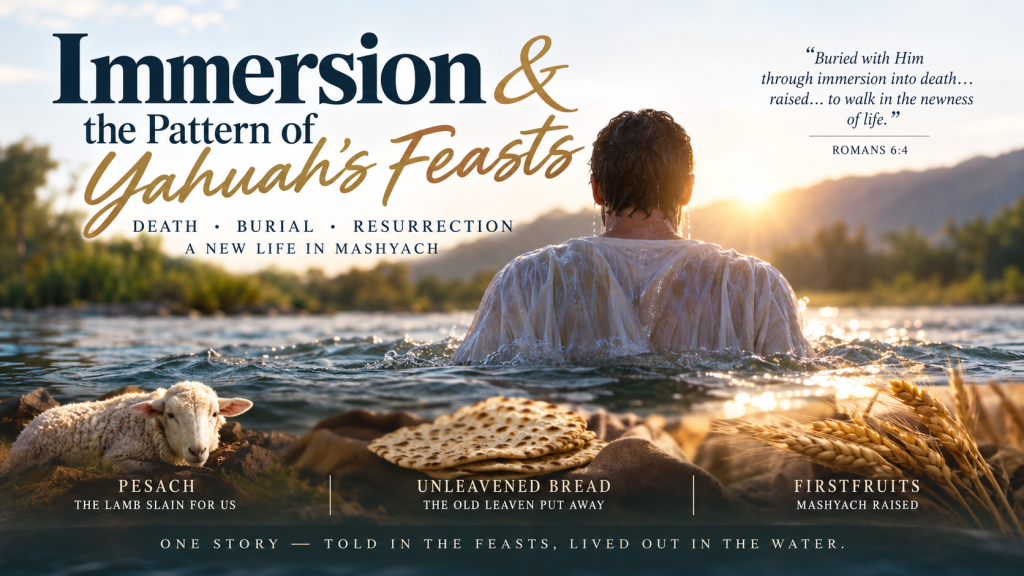
The Pesach dinner itself was actually a sacrifice that Yahusha fulfilled. But He gave us new emblems to remember it by in the Master’s Supper:
- The lamb represented His body.
- The blood on the doorposts represented His blood.
- He said the bread is His body.
- He said the wine is His blood.
So the same symbols we saw at Pesach are now found in the Master’s Supper, which He gave us as the way to remember Him. If someone chooses to eat lamb after that, that’s their choice. But it should not be called a Passover lamb, because Yahusha is our Passover Lamb and He has completed that sacrifice.
Lamb Is Clean to Eat Anytime
Important Clarification: Eating Lamb Is Not Forbidden
Eating lamb on Passover, during Unleavened Bread, or any other day is perfectly fine. Lamb chops, roasts, or any other lamb dishes are not forbidden foods. The issue is not with eating lamb itself.
The key point is this: we cannot and should not call it a “Passover Lamb” or claim we are keeping any biblical mandate or memorial when we eat lamb today. It’s simply not possible to fulfill the Torah requirements for the Passover sacrifice in our current situation.
The freedom to eat lamb + the clarity that it’s not a biblical commandment = pastoral wisdom that protects both liberty and truth.
Summary: Scripture Alone
“Test all things, hold fast what is good.”
— 1 Thessalonians 5:21
- Yahusha fulfilled the lamb sacrifice once for all time.
- The Torah required a whole, unbroken lamb—fulfilled perfectly in Him alone.
- The sacrifice could only be done at Yahuah’s chosen place—the Temple no longer stands.
- The veil was torn—animal sacrifices are forever finished.
- Yahusha gave us the Master’s Supper as the memorial He desires.
We must worship in spirit and truth, not by adding human traditions. Yahusha is enough. His sacrifice was perfect, complete, and final. We honor Him best by following His clear instructions rather than creating our own additions to His perfect work.