Does the Command to Dwell in Booths Apply Today?
A Biblical Breakdown of the Sukkah: Then and Now
A scriptural examination of Yahuah’s command to dwell in temporary shelters — its origins, its depth, and its meaning for us today
Q: Does the assembly have to stay in tents to keep the Feast of Sukkot?
A:
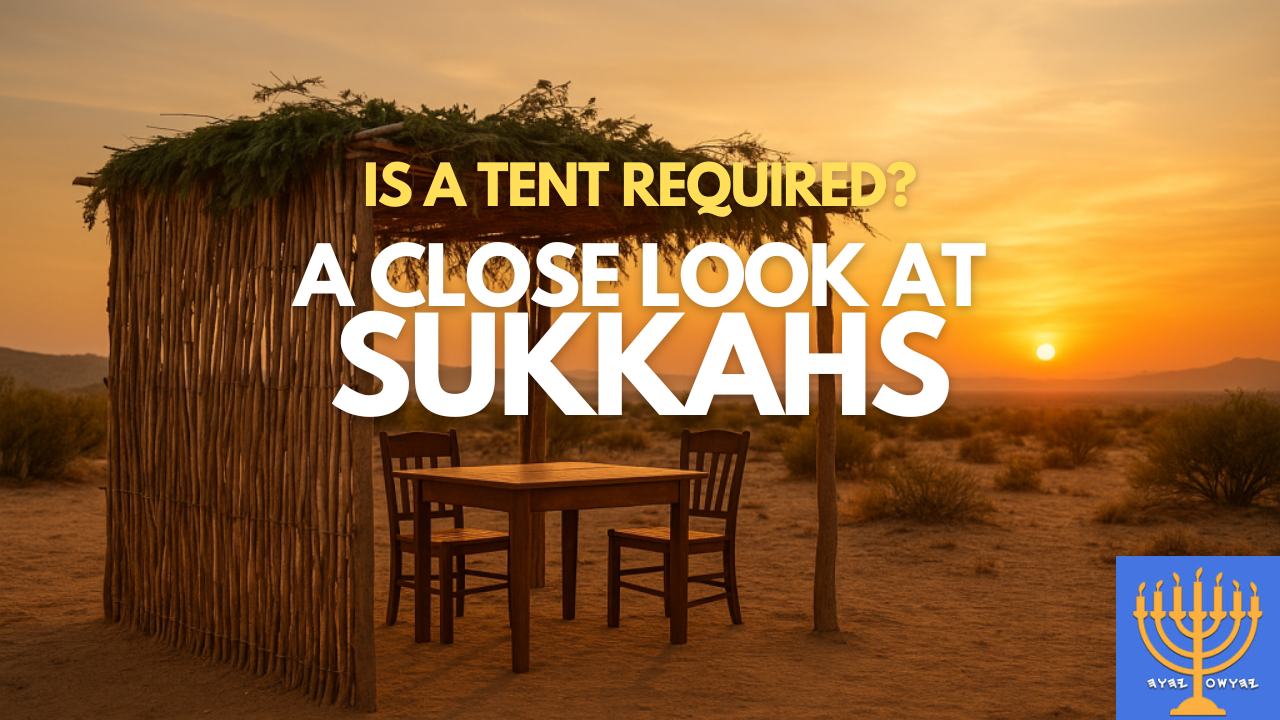
Scripture commands us to dwell in temporary shelters — not specifically modern camping tents. In ancient times, these shelters were simple booths made from branches and natural materials. Today, whether in a tent, RV, cabin, or Airbnb, if you are stepping away from your regular home to dwell temporarily, you are honoring the command.
Scripture commands us to dwell in temporary shelters — not specifically modern camping tents. In ancient times, these shelters were simple booths made from branches and natural materials. Today, whether in a tent, RV, cabin, or Airbnb, if you are stepping away from your regular home to dwell temporarily, you are honoring the command.
01
01
The Command to Dwell in Booths
Primary Scriptural Witnesses
“Dwell in booths for seven days… so that your generations know that I made the children of Yisra’el dwell in booths when I brought them out of the land of Mitsrayim. I am Yahuah your Elohim.”
Wayiqra (Leviticus) 23:42–43
“And they found written in the Torah… that the children of Yisra’el should dwell in booths during the feast of the seventh month… and all the assembly made booths and dwelt in the booths.”
Nehemyah (Nehemiah) 8:14–17
“But I am Yahuah your Elohim… I shall yet make you dwell in tents, as in the days of the appointed time.”
Hoshea (Hosea) 12:9
The command of Sukkot is simple yet profound: step away from your permanent home and dwell in temporary shelters for seven days. This observance serves as both a memorial of Yisra’el’s wilderness journey and a reminder that our security comes from Yahuah — not from our possessions or permanent structures.
Additional Witnesses
Debarim 16:13–15Rejoicing in the feast
Debarim 31:10–11Torah reading during Sukkot
Zecharyah 14:16–19All nations will keep Sukkot in the Kingdom
Yochanan (John) 7:2, 37Yahusha taught during Sukkot
2 Corinthians 5:1Our “earthly tent” as a temporary dwelling
02
02
A Nomadic People
From Abraham to the Wilderness
Yisra’el’s history is deeply rooted in temporary dwelling. Abraham, Isaac, and Jacob lived in tents as strangers and pilgrims in the land — they were not building permanent cities. They were following a promise.
“By faith he went to live in the land of promise, as in a foreign land, living in tents with Isaac and Jacob, heirs with him of the same promise. For he was looking forward to the city that has foundations, whose designer and builder is Elohim.”
Ibrim (Hebrews) 11:9–10
During the wilderness journey, Yisra’el continued this lifestyle — dwelling in portable shelters, moving when the cloud moved, stopping when it stopped. Nehemiah 8:15 records that the sukkot were built from olive branches, palm branches, and leafy trees. Simple. Temporary. Tied to the land, not anchored to a permanent address.
“He spread a cloud for a covering, and fire to give light by night.”
— Tehillim (Psalm) 105:39
When we step out of our permanent homes to dwell in temporary shelters today, we step into that same story. We declare, with our bodies, what our ancestors declared with theirs: I do not live by my own walls. I live by Yahuah’s provision.
03
03
How We Keep Sukkot Today
Dwelling in Temporary Shelters & More
Sukkot is a seven-day festival beginning on the 15th day of the seventh month (Tishrei), five days after Yom Kippur. Its primary observance is dwelling in temporary shelters. The first day is a holy convocation, and so is the day immediately following the festival — the Last Great Day (Shemini Atzeret, Leviticus 23:36, 39).
Typically, we gather in places with tent sites, RV spaces, cabins, or lodges so we can dwell together as a community. While we are primarily a virtual assembly, we make it a point to meet in person during these appointed times. Whether in a tent, RV, cabin, or Airbnb — no dwelling is more or less spiritual than another. They are all temporary by nature, and that is the point.
1
Leave Your Permanent Home
The foundational act is physically departing from your regular dwelling for seven days. This departure — this willingness to live differently — is where the observance begins.
2
Dwell — Not Just Visit
The Hebrew word is yashab — to sit, to remain, to settle. Eat there. Sleep there. Be present there. This is not a day trip to a campsite and back home to your own bed.
3
Study, Worship, and Fellowship
We gather to study Scripture, worship, and fellowship with others who are keeping the feast. Sukkot is marked by joy and gratitude for Yahuah’s provision (Debarim 16:14–15), while also serving as a memorial of our dependence on Him.
4
Rejoice
The command to rejoice appears three times in connection with this feast. Sing, celebrate, share meals, invite others. This is the season of our joy — Z’man Simchatenu. Let it feel that way.
5
Rest on the First and Eighth Day
The first day is a set-apart assembly — no ordinary work. The eighth day, Shemini Atzeret, is also a set-apart assembly and carries its own prophetic significance as a closing feast.
Families may build sukkahs of branches, camp in tents, stay in RVs, or use other temporary dwellings. The goal is to step away from normal routines and create a tangible reminder that we are pilgrims on this earth — sustained not by our own resources but by Yahuah’s faithful provision.
04
04
All the Names of Sukkot
This feast is so rich in meaning that Scripture refers to it by multiple names — each highlighting a different facet
| Name | Meaning | Scripture | Emphasis |
|---|---|---|---|
| Sukkot | סֻכּוֹת — Booths / Tabernacles | Lev. 23:34 | Temporary dwellings |
| Feast of Booths | חַג הַסֻּכּוֹת | Lev. 23:34 | The command itself |
| Feast of Tabernacles | English rendering | Lev. 23:34 | Dwelling structures |
| Feast of Ingathering | חַג הָאָסִיף — Harvest feast | Ex. 23:16; 34:22 | Provision & harvest |
| The Feast | Honorary title | Yochanan 7:2 | Importance of the moed |
| Z’man Simchatenu | זְמַן שִׂמְחָתֵנוּ — Season of Our Joy | Liturgical | The command to rejoice |
All these names refer to the same appointed time, emphasizing both remembrance and rejoicing. It was so significant among Yisra’el that it needed no further introduction — simply “The Feast” said everything.
A note on the Four Species (Arba Minim): Leviticus 23:40 also commands the taking up of four specific plants on the first day — the etrog (citron), lulav (palm branch), hadas (myrtle), and aravah (willow). This is a distinct command from the dwelling command and is traditionally observed by holding and waving these four species together. Like the sukkah command, the emphasis is on the act of obedience and its meaning — a declaration that Yahuah’s presence and sovereignty extend over all of creation — rather than on achieving a perfect botanical replica.
05
05
Our Messiah Kept It
And the Apostles Continued
Some believe the feasts were done away with — but Scripture shows that Yahusha Himself kept Sukkot (Yochanan 7:2, 10, 14, 37). He went up to Yerushalayim for this very feast, taught publicly during it, and on its last and greatest day declared Himself to be the source of living water.
“On the last day of the feast, the great day, Yahusha stood up and cried out, ‘If anyone thirsts, let him come to me and drink. Whoever believes in me, as the Scripture has said, Out of his heart will flow rivers of living water.'”
Yochanan (John) 7:37–38
After His resurrection, the apostles continued to observe the appointed times. Shaul hurried to keep the feast in Yerushalayim (Acts 18:21; 20:16) and instructed believers in ways consistent with these moedim (1 Corinthians 5:7–8). If the feasts had been abolished, why would Yahusha and His Spirit-filled apostles continue to observe them?
Many scholars now recognize that the birth of Yahusha most likely occurred during Sukkot — when the Word became flesh and tabernacled among us (Yochanan 1:14). The Greek word eskēnōsen literally means “pitched His tent” or “set up His sukkah.” The Messiah Himself was a temporary dwelling — Elohim in a body of flesh, living among His people.
06
06
A Note on Modern Tents
Modern Materials vs. Ancient Sukkot
Some feel that staying in a camping tent is the most scriptural way to keep Sukkot — more authentic, more faithful to the command than an RV or cabin. That desire to honor Yahuah is sincere. But let’s follow that reasoning all the way through.
Scripture is actually quite specific about what an ancient sukkah was made of. If we are going to appeal to the letter of the command, then a genuine scriptural sukkah would require:
Goat Hair Fabric
Exodus 26:7; 36:14 — the coverings of the Tabernacle, which informed Israel’s dwelling practices, were woven from goat hair. Not nylon. Not polyester.
Tree Branches for the Roof
Nehemiah 8:15 — olive branches, palm branches, myrtle boughs, and willows were gathered and used to construct the booths. The schach (roof covering) was specifically cut plant material.
Natural Ropes and Wooden Stakes
Exodus 35:18; 39:40 — natural fiber rope and wooden stakes, not the aluminum poles, plastic clips, and synthetic tie-downs of a modern camping tent.
Materials Gathered from the Land
Leviticus 23:40; Nehemiah 8:16 — people went out and gathered what grew around them. Nothing was manufactured in a factory or shipped from a warehouse.
Here is the point: a modern nylon camping tent is no closer to an ancient sukkah than a wooden cabin is. Both are equally removed from what Yisra’el actually built. If your standard is “the closer to the original, the more scriptural” — then no one today is meeting that standard. Not the tent camper. Not the cabin renter. Not anyone.
This means the legalistic argument — that you must be in a tent for your Sukkot observance to “count” — has no scriptural foundation. The command is about leaving your permanent home and dwelling temporarily. A cabin away from home fulfills that command just as faithfully as a tent. Neither is a replica of the ancient sukkah, and neither needs to be.
What matters is obedience to what the command actually says, not competition over whose temporary dwelling looks the most ancient.
07
07
The Heart of the Matter
“That your generations may know” — Wayiqra 23:43
At the core of the Sukkot commandment is a purpose Yahuah states plainly: “that your generations may know.” This is an education commandment. Yahuah is building memory into His people through physical, embodied experience — not doctrine on a page, but a week of living differently.
Dependence on Yahuah
Leviticus 23:43 — stepping out of your permanent home is a declaration that your security is not in your walls, your possessions, or your own provision.
Gratitude and Joy
Deuteronomy 16:15 — this is the season of our joy. The command to rejoice is not incidental. It is central to the feast.
Strengthening Community
Nehemiah 8:17 — when the people kept Sukkot together, there was very great rejoicing. The feast is meant to be shared.
Anticipation of the Kingdom
Zechariah 14:16 — all nations will come up to keep Sukkot in the Messianic age. This feast points forward, not just backward.
“These all died in faith, not having received the things promised, but having seen them and greeted them from afar, and having acknowledged that they were strangers and exiles on the earth.”
— Ibrim (Hebrews) 11:13
The dwelling itself does not make us more spiritual. What matters is obedience, remembrance, and rejoicing before Yahuah — whether under a canopy of palm branches, in a well-heated cabin, or parked in an RV with your family and your Scriptures open on the table.
08
08
Scripture Is the Standard
Not Tradition, Not Feeling, Not What Looks Most Authentic
It is natural to want our observance to feel meaningful — even ancient. When we keep a feast that goes back thousands of years, there is something in us that wants the experience to look and feel as close to the original as possible. That instinct comes from a sincere place.
But sincerity is not the same as accuracy. And when one group begins telling another group that their Sukkot observance does not “count” because they stayed in a cabin instead of a tent — without any scriptural basis for that claim — they have crossed from faithfulness into Pharisaical thinking. They are adding to the command, not keeping it.
“You shall not add to the word that I command you, nor take from it, that you may keep the commandments of Yahuah your Elohim that I command you.”
Debarim (Deuteronomy) 4:2
The command says: dwell in temporary shelters. It does not say: dwell in a nylon tent. It does not say: the more uncomfortable, the more faithful. It does not say: an RV or cabin disqualifies you. Our standard must always be what Scripture actually says — not what feels more authentic, not what a particular community has elevated into a requirement.
Yahuah gave us a command we can actually keep — step away from your permanent home and live temporarily, rejoicing before Him for seven days. He did not make it a construction competition. We should not make it one either.
09
09
Understanding Sukkah & Sukkot
Word Study on סֻכָּה (Sukkah) and סֻכּוֹת (Sukkot)
סֻכָּה
Sukkah — Strong’s #5521
A temporary shelter or booth used for protection and dwelling. Found in Genesis 33:17 (Ya’akov made sukkahs for his livestock), Jonah 4:5, and throughout Leviticus 23. The defining characteristic is impermanence — not construction method.
סֻכּוֹת
Sukkot — Plural Form
The plural of sukkah — “booths” or “temporary dwellings.” Became the name of the feast itself because the appointed time centers around dwelling in these shelters. Each individual shelter is a sukkah; the feast is Sukkot.
שָׁכַן
Shakan — To Dwell
To inhabit, to settle, to take up residence. Root of both Mishkan (Tabernacle) and Shekinah — the dwelling presence of Yahuah. The same root connects the sukkah to Yahuah’s own act of dwelling among His people.
יָשַׁב
Yashab — To Dwell
To sit, to remain, to settle as a resident. The word used in the Sukkot command (Lev. 23:42). Describes genuine habitation — not a visit, not a day trip. But it speaks to the act of dwelling, not the specification of building materials.
Yahuah’s own portable dwelling in the wilderness — the Mishkan — was also temporary. It moved when the people moved. He did not live in a permanent palace while commanding His people to dwell in temporary shelters. He dwelt among them in the same kind of impermanence. The sukkah is a reflection of that same posture: we are sojourners here, and our dwelling says so.
10
10
In Summary
Sukkot is not about perfectly recreating the past — it is about faithfully remembering it
The command is clear: leave your permanent home and dwell in temporary shelters for seven days as a memorial of Yisra’el’s wilderness journey and your dependence on Yahuah. The command specifies the act. It does not specify nylon vs. canvas, a branch roof vs. an RV awning, a state park campsite vs. a mountain cabin.
The Assembly of Yahuah’s Understanding
The Feast of Sukkot reminds us of our ancestors’ journey through the wilderness and our ongoing dependence on Yahuah. Whether in a tent, RV, cabin, or other temporary shelter — the focus is obedience, remembrance, and rejoicing before Him. The command is to step away from your usual home and live in a temporary dwelling. The specific structure is secondary to the act of leaving and the posture of the heart.
Tent
Temporary. Valid. Honors the command.
RV or Camper
Temporary. Valid. Honors the command.
Cabin or Airbnb
Temporary. Valid. Honors the command.
Chag Sukkot Sameach — A joyful Feast of Booths to you and your household.
Historical Note
Archaeological and historical evidence confirms that Sukkot was one of the most widely and joyfully celebrated feasts in ancient Yisra’el. The Mishnah (Sukkah tractate) records that the water-drawing ceremony was so spectacular that the sages declared: “One who has not seen the joy of Beit HaSho’evah has never seen joy in his life.”
Josephus called Sukkot “the holiest and greatest of the Hebrew feasts.” The Talmud refers to it simply as HeChag — “The Feast” — as though no further description were needed. Historical records from the Second Temple period describe the Temple Mount ablaze with enormous menorot during Sukkot — the backdrop against which Yahusha stood and declared Himself the Light of the World.
Zechariah 14 indicates that Yahuah’s intention was always for the nations to come and observe Sukkot in the Messianic Kingdom — suggesting this feast was always meant to be universal, not merely national. We keep it today in that same anticipation.
Summary
We observe Sukkot in accordance with the Torah commandment — dwelling away from our permanent homes in temporary shelters for seven days, celebrating Shemini Atzeret on the eighth day, and resting from ordinary work on the first and eighth days. We observe the biblical calendar based on the sighted new moon and aviv barley. Whether members stay in tents, RVs, cabins, or other temporary accommodations, we encourage full and joyful participation. The focus is obedience, remembrance, and rejoicing before Yahuah.
We observe Sukkot in accordance with the Torah commandment — dwelling away from our permanent homes in temporary shelters for seven days, celebrating Shemini Atzeret on the eighth day, and resting from ordinary work on the first and eighth days. We observe the biblical calendar based on the sighted new moon and aviv barley. Whether members stay in tents, RVs, cabins, or other temporary accommodations, we encourage full and joyful participation. The focus is obedience, remembrance, and rejoicing before Yahuah.
For those who cannot attend an in-person feast meetup, many join us virtually — and some set up a tent in their backyard, sleep in their living room, or build a makeshift sukkah on their balcony to honor the spirit of the command from wherever they are. When possible, we recommend families gather together, even if just your immediate family at a nearby campsite. Community is part of the joy of Sukkot, and every effort to step away from the ordinary and dwell temporarily — however that looks for your household — is a faithful and meaningful observance.